A shark chasing a fish is only the visible end of a much longer story. That fish may have eaten smaller fish, which ate tiny drifting animals, which depended on microscopic producers. Following this trail makes the ocean food chain easier to understand: food energy moves from producers through consumers to larger predators.
Yet there is no single ladder that fits every habitat. Animals have several prey species, and hunters can become prey themselves. Scientists therefore describe each marine food chain as part of a wider ocean food web.
Where the ocean food chain begins
Phytoplankton turn sunlight into food
In sunlit surface waters, microscopic algae and photosynthetic microbes called phytoplankton use light, carbon dioxide and nutrients to produce organic matter. They are primary producers, creating food that supports much of the marine ecosystem. Larger seaweeds and seagrasses perform similar roles in shallow coastal habitats.
Phytoplankton growth varies with light, temperature and nutrients. Where currents carry nutrient-rich deep water upward, blooms can support concentrations of fish, birds and whales.
Zooplankton connect producers to animals
Zooplankton include copepods, krill, drifting larvae and other small organisms. Some graze phytoplankton; others eat zooplankton. This is the essential handoff in a plankton food chain: energy captured by producers becomes food for animals.
Many zooplankton rise toward the surface at night to feed, then descend during daylight to avoid visual predators. Their movement also transports organic material through the water.
How energy moves through trophic levels
Ecologists call feeding positions trophic levels. Producers form the first level; primary consumers eat producers; secondary consumers eat primary consumers; higher consumers eat other animals. One possible pathway is phytoplankton to copepods to anchovies to tuna to a large predatory shark. Each step transfers some energy through feeding.
But energy is lost from the feeding pathway at each step. Animals use much of what they consume for movement, respiration and other processes, and some becomes waste. The often-quoted idea that about ten percent passes upward is a rough teaching guide, not a fixed marine rule.
Small fish link plankton to predators
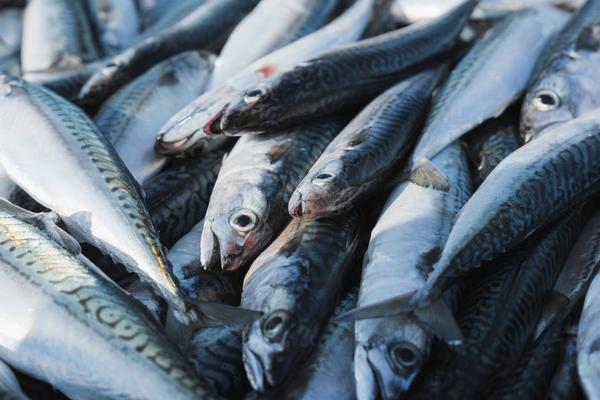
Anchovies, sardines and herring often feed on plankton and become prey for tuna, seabirds, seals, dolphins and larger fish. These forage species matter because many predators rely on them. A sharp decline in one can affect several other populations.
Huge animals can feed low in the chain
Body size does not determine feeding level. Blue whales, among the largest animals ever, eat mainly krill. Their baleen plates strain prey from seawater, allowing energy to travel from phytoplankton through krill directly to a giant whale.
Why an ocean food web is more realistic
Consider herring. They may eat copepods and other small animals, then become food for cod, seals, seabirds or whales. Those predators also consume different prey. Draw all the connections together and the result is a web, not a line.
Relationships also change with age and place. A young fish may consume plankton while its adult form hunts fish. One species can occupy more than one trophic position. In a food-web diagram, arrows point from the organism being eaten toward the consumer, showing the direction of energy movement.
Where turtles, dolphins, sharks and whales fit
Marine predators do not share a single menu. Dolphins often hunt fish and squid, sometimes coordinating their movements. Sharks may eat fish, rays, squid or marine mammals, depending on species. Orcas, which are toothed whales, can be apex predators, although different populations specialize in different prey.
Sea turtles demonstrate why generalizations fail. Leatherbacks consume jellyfish and other gelatinous animals. Many adult green turtles mainly graze seagrasses and algae; loggerheads often take crabs and mollusks. Their feeding roles differ despite their shared name.
Some whales hunt fish while many baleen whales filter krill or schooling prey. Looking more closely at what sea turtles eat, what dolphins eat and what sharks eat helps explain their places in the connected system.
A real-world example: otters, urchins and kelp
In a Pacific kelp forest, sea urchins graze kelp while sea otters eat urchins. Where otters limit heavy grazing, kelp forests can provide habitat for fish and invertebrates. If otters decline, urchins may become abundant enough to remove large areas of kelp.
This is a trophic cascade: a predator’s influence travels across several feeding connections. It is a useful reminder that protecting marine predators can help organisms those predators never eat directly.
Leftovers, deep water and another energy source
The marine food chain does not end at death. Scavengers such as crabs and worms eat remains; decomposers break organic matter down and recycle nutrients. Dead plankton, waste and debris sink as marine snow, carrying food into darker waters.
Most marine food webs ultimately draw on sunlight, but there is an exception. At some hydrothermal vents and cold seeps, microbes use chemical energy to create organic matter through chemosynthesis. They support communities where sunlight never reaches. The energy source is different, but the relationships between producers and consumers remain.
What happens when one link changes?
Removing too many forage fish can leave less food for seabirds and marine mammals. Warming seas can shift plankton blooms or prey distributions, causing predators to arrive where food is no longer plentiful. Pollution and habitat loss can disrupt several pathways simultaneously.
Try examining any marine animal by asking three questions: What does it eat? What eats it? What supports its prey? Tracing energy in both directions reveals more than ranking animals from smallest to largest.
Frequently asked questions
What starts the ocean food chain?
In sunlit waters, phytoplankton are major primary producers. Seaweeds and seagrasses also support coastal food webs, while some deep-sea systems begin with chemosynthetic microbes.
What is the difference between a food chain and a food web?
A food chain traces one feeding route. A food web shows multiple interconnected routes and reflects the different foods eaten by marine animals.
Are sharks always at the top?
No. Some sharks are apex predators, but smaller sharks may be eaten by larger sharks or orcas. Position depends on species, size and habitat.
Why is plankton important to marine predators?
Plankton supports krill and small fish that become prey for larger animals. Even predators that never eat plankton can depend on the energy it supplies.
Conclusion
The ocean food chain is best understood as a network of energy pathways. Microscopic producers nourish grazers; these feed fish and marine mammals; predators shape populations; and scavengers and decomposers recycle what remains. Every connection helps keep ocean ecosystems functioning.