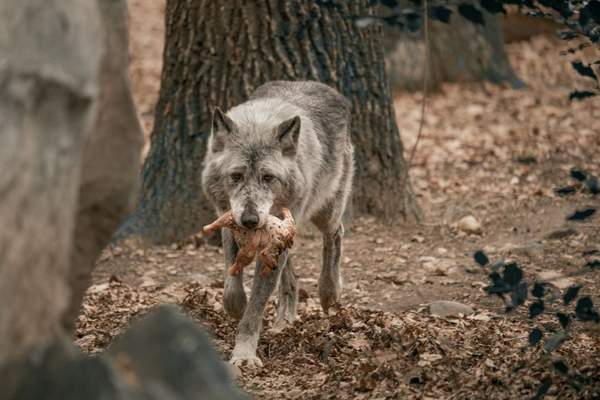
A gray wolf pack may look like a perfectly organized hunting team, but its everyday life is closer to that of a family. Parents guide young wolves, older siblings help raise pups, and individuals continually read one another’s signals. Gray wolf pack behavior makes more sense when viewed through those relationships, rather than through the idea that every animal is competing for rank.
Working together helps wolves raise offspring, defend space, and hunt prey that can outweigh them many times over. Yet cooperation is flexible: pack members have different temperaments and experience, and their roles change with the season.
Wolf Pack Structure: A Family First
Most wild packs begin with a breeding male and female and include their offspring from one or more years. The parents generally make decisions about movement and reproduction because they are the adults raising the family. Some packs also include unrelated individuals or more than one breeding pair.
The familiar image of an “alpha wolf” winning leadership through constant fighting largely comes from observations of unrelated wolves housed together in captivity. In a typical wild gray wolf family, the leaders are simply the parents. This does not mean wolves never compete or disagree; it means a permanent ladder of challengers is a poor description of most natural packs.
What Do Different Pack Members Do?
Breeding adults often lead travel, defend territory, and provide food. Older offspring may hunt alongside them, watch younger pups, or help deliver food. Yearlings learn by joining these activities, while pups spend their early months playing and exploring near protected gathering places.
These are not fixed job titles. A skilled younger wolf may find prey first, while an older one may hang back during a dangerous chase. Wolf pack structure depends on kinship and cooperation, not identical behavior from every member.
Wolf Communication Goes Beyond Howling
Wolves communicate through posture, facial expression, touch, scent, and sound. An upright stance and raised tail can convey confidence; a lowered body, tucked tail, or muzzle lick may defuse tension or greet another wolf. Play bows and relaxed movements help signal friendly intentions.
Context matters. Bared teeth accompanied by stiff movement differ from the quick muzzle licking that pups use when seeking food. A single tail position does not reveal everything about a wolf’s mood.
Why Do Wolves Howl?
Howling carries over long distances and helps separated packmates find one another, gather before or after activity, and advertise an occupied territory. A chorus can sound like a much larger group than the number of wolves actually calling. Wolves do not howl at the moon; the association persists because people notice howling at night.
Barks can signal alarm, growls can warn against an approach, and whines often accompany close social interaction. Scent marks from urine and feces provide another form of wolf communication, even when no other wolf is present to hear a call.
Territory Is Both a Resource and a Responsibility
A pack uses an established territory where it can find prey and suitable places to raise pups. Its size varies with landscape, prey abundance, and competition. Wolves mark boundaries, patrol frequently used routes, and sometimes howl in ways that warn neighboring packs.
Territorial disputes can be dangerous, so signaling may help animals avoid direct encounters. Territory also connects to gray wolf habitats: the same family may change its travel patterns as prey moves between valleys, forests, and open ground.
How Cooperative Wolf Hunting Works
Wolf hunting behavior is not usually a rehearsed sequence in which every wolf has a permanent assignment. Packs often travel together, detect prey through scent and sight, and test how animals respond. A chase may end quickly if the prey is too fast, healthy, or risky to tackle.
When wolves pursue large hoofed animals such as elk, several packmates may approach from different directions, increasing opportunities to isolate an individual. But successful hunts depend on terrain, snow conditions, prey defenses, the wolves’ experience, and chance. More wolves do not automatically mean more food per wolf.
A Practical Example from Elk Country
Imagine a pack encountering an elk herd at the edge of a snowy meadow. One wolf approaches, and the herd bunches together. Another circles toward the side, but the animals remain alert. If no vulnerable elk becomes accessible, the wolves may abandon the attempt rather than risk injury from hooves. What looks like hesitation is often sensible energy management.
This is why wolf diets in the wild cannot be understood through dramatic chase footage alone. Wolves also scavenge, take smaller prey, and spend considerable time traveling between feeding opportunities.
Raising Pups Takes the Whole Family
Wolf pups are born in spring in a den, blind and dependent on their mother. As they grow, adults and older siblings bring food, sometimes regurgitating meat for youngsters that cannot yet hunt. Packmates may also stay near pups while others travel in search of prey.
After the den stage, pups often spend time at rendezvous sites: gathering areas where they rest, wrestle, and explore under the care of older wolves. Play builds coordination and teaches social boundaries. By autumn, growing pups increasingly accompany the pack, although hunting competence develops with practice.
Watching a pup nip an older sibling’s muzzle might look like misbehavior. In the gray wolf family, it can be part of food begging, greeting, and learning which signals get a response.
Why Packs Grow, Shrink, and Split
Pack membership changes through births, deaths, and dispersal. Young adults commonly leave their birth pack to seek a mate and establish a territory elsewhere. Some travel alone for long distances; others join an existing pack when an opportunity arises.
A pack may be largest after its pups have grown and smaller again as members disperse. Losing a breeding adult can also change family dynamics. These shifts influence where wolves occur and help explain why wolf conservation depends on connected landscapes, sufficient prey, and coexistence with people.
Frequently Asked Questions
How many gray wolves live in one pack?
Pack size varies considerably. Many are modest family groups, while packs with ten or more wolves occur where conditions allow. Numbers change across seasons as pups are born and older offspring leave.
Do gray wolves have an alpha male and female?
Most wild packs are led by breeding parents rather than unrelated wolves constantly fighting for top rank. Researchers often prefer “breeding pair” or “parents” because those terms better describe the family relationship.
Do wolves always hunt in packs?
No. Wolves sometimes hunt alone, especially when pursuing smaller prey. Group hunting becomes particularly useful with large, difficult prey, although coordinated effort never guarantees a kill.
How do wolves recognize members of their pack?
They use a combination of smell, vocalizations, appearance, and repeated social contact. Familiar greetings and shared routines help maintain relationships, including after packmates have been apart.
Conclusion
Gray wolf pack behavior is shaped by family bonds, communication, and the hard choices involved in surviving together. Parents lead, younger wolves learn, and hunting strategies adjust to real conditions rather than rigid rules. Understanding those relationships also reveals why prey, territory, and safe movement between habitats matter so much to the future of wild wolves.