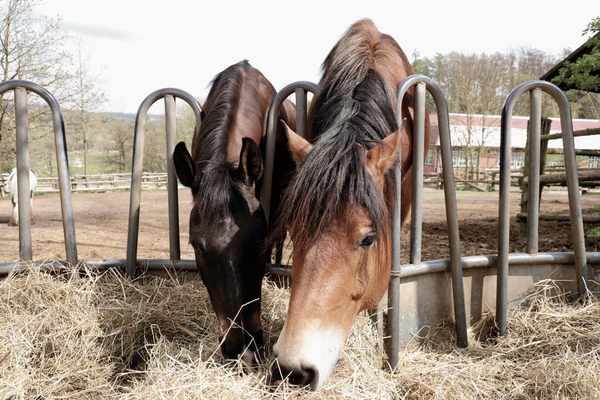
Good feeding decisions begin with an ordinary question: what does this horse need today? A retired pony with access to grass has a different energy budget from a competition horse in training. Yet both depend on the same foundations: sufficient forage, constant access to water, balanced nutrients and a routine that protects digestive health. This horse feeding guide explains how to build that foundation without treating every bucket of feed as a shortcut to better nutrition.
Start With Forage, Not the Feed Scoop
Horses evolved to graze for much of the day. Their digestive systems rely on a steady supply of fiber, which microbes ferment in the hindgut. Long gaps without forage can leave horses hungry, encourage undesirable behaviors and complicate digestive management. For most healthy adult horses, hay or pasture should form the majority of the daily ration.
A common starting point is about 1.5–2% of body weight per day as forage dry matter, adjusted for the individual. For a 500 kg horse, that means approximately 7.5–10 kg of dry forage. Actual hay weight will be higher because hay contains moisture; pasture grass contains considerably more. These figures are guides, not instructions to restrict an overweight horse without professional advice.
Choosing Between Hay and Pasture
Clean grass hay suits many horses doing light work. Legume forage, including alfalfa, typically provides more protein and calcium and may help horses with greater nutritional demands. Quality matters more than a fashionable hay name. Reject moldy, dusty or spoiled forage, and consider a laboratory hay analysis when planning a ration for several horses or one with special needs.
Pasture offers movement and grazing time, but its nutritional value changes with season, weather and growth stage. Lush grass may be inappropriate for horses prone to laminitis or insulin dysregulation. A practical guide to evaluating hay quality can make buying horse forage less dependent on appearance alone.
Water and Salt Are Part of the Ration
A horse can have excellent hay and still face problems if drinking water is scarce, dirty or frozen. Supply clean, palatable water continuously and check troughs daily. Adult horses may drink roughly 20–45 liters or more each day, with intake rising substantially during heat, exercise, lactation or dry-feed consumption. Monitor what is normal for your horse rather than relying on one universal number.
Provide an appropriate salt source because forage alone is generally low in sodium. Horses sweating heavily may need additional electrolyte management, but supplements should not replace free access to plain water. Sudden reductions in drinking or appetite deserve prompt attention.
When Are Concentrates Actually Needed?
Horse concentrates include manufactured feeds and calorie-dense ingredients designed to supply energy or specific nutrients. They are not automatically necessary. A healthy adult maintaining condition on suitable forage may need no traditional grain feed, although a ration balancer can be useful if forage leaves vitamin, mineral or protein gaps.
Greater demands change the equation. Horses in sustained training, lactating mares and animals struggling to hold weight may benefit from carefully selected concentrates. Choose a product formulated for the horse’s age, workload and health status, then follow its feeding directions by weight. A scoop measures volume, not nutrition: two feeds filling the same scoop can weigh very differently.
Do Not Confuse More Grain With Better Feeding
Large starch-rich meals can overwhelm normal digestion and increase health risks. If concentrated feed is necessary, divide the daily amount into smaller meals and maintain ample forage. Horses with laminitis, metabolic disease or other diagnosed conditions may need a low-sugar, low-starch plan established with a veterinarian or qualified equine nutritionist.
Match Feed to Body Condition and Workload
Body condition tells you more about energy balance than a glossy coat or an enthusiastic appetite. The widely used nine-point Henneke scale assesses fat coverage at areas including the ribs, neck, withers and tailhead. Many adult horses do well around scores 4–6, although the appropriate target depends on health and activity.
Feel the ribs regularly and track changes with photographs, a weight tape or, where available, a livestock scale. A weight tape is best used consistently to follow trends rather than treated as a perfectly accurate measurement. A horse that becomes rounder while its workload falls probably does not need extra calories. One losing condition despite adequate forage needs investigation, not simply a larger grain scoop.
A Practical Stable-Yard Example
Imagine a 500 kg gelding moving from regular lessons to two easy rides a week. His owner keeps the same energy-rich concentrate while turnout remains plentiful. Over several weeks, his ribs become harder to feel. The sensible response is to reassess calorie intake, forage quality and actual exercise, then adjust the concentrate gradually while protecting adequate fiber intake. Starving him of hay would be the wrong shortcut.
Now reverse the situation: a horse begins more demanding work and slowly loses condition. First check hay availability, dental health, parasites and any signs of illness. If the basics are sound, additional calories may be needed. This is why a horse body condition scoring guide belongs alongside any feeding plan.
Make Diet Changes Slowly
Hindgut microbes adapt to the feeds they encounter. A sudden switch between hays, a new concentrate or hours of unexpected lush grazing can disrupt that balance. Introduce changes progressively, generally over at least 7–10 days; some horses and transitions need longer.
For a change of bagged feed, begin with mostly the familiar ration and replace a small portion with the new feed every couple of days. Weigh each portion, watch manure consistency and appetite, and slow the transition if the horse struggles. Pasture introductions also need managed grazing time, especially for animals at metabolic risk.
Build a Simple Daily Feeding Routine
Consistent equine feeding is easier when each caretaker follows the same plan. Record the horse’s estimated weight, forage allocation, concentrate weights, feeding times and any veterinary instructions. Offer frequent opportunities to eat forage, and avoid leaving stabled horses for long periods with nothing to chew.
Frequently Asked Questions
How much hay should a horse eat daily?
Many healthy adult horses start around 1.5–2% of body weight in forage dry matter per day. Convert that into actual hay weight according to its moisture content, and account for pasture. A veterinarian or nutritionist can help adjust the amount for obesity, illness or unusual energy demands.
Can a horse live on hay without grain?
Yes. Many healthy, lightly worked adults can maintain weight on good-quality forage. However, forage may not cover every vitamin and mineral requirement, so a suitable ration balancer or targeted supplement may still be appropriate.
Should I feed before or after riding?
Provide routine access to forage, but avoid large concentrate meals immediately before strenuous exercise. Plan substantial grain meals around work and allow the horse to cool down appropriately. Water should remain available, including after exercise.
A Feeding Plan That Can Adapt
Sound horse nutrition rarely depends on an elaborate list of ingredients. Start with safe, sufficient forage and water, add balanced nutrients where the ration needs them, and use concentrates only to meet genuine requirements. Measure portions, watch the horse in front of you and make adjustments gradually. Those habits create a feeding program that remains useful long after a particular bag of feed has changed.