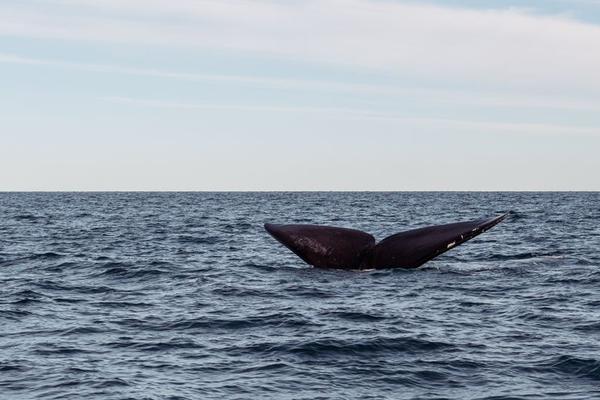
A blue whale swallowing a cloud of krill and a sperm whale pursuing squid deep underwater are both whales, but they make a living in strikingly different ways. The central distinction in baleen whales vs toothed whales is how they obtain food: one group filters small prey from water, while the other generally captures individual animals. That difference influences their anatomy, senses, size, and behavior.
Understanding these two whale types makes it easier to recognize familiar species, from humpbacks and gray whales to dolphins, orcas, and narwhals.
Two branches of the whale family
Whales, dolphins, and porpoises belong to the mammalian group called cetaceans. Living cetaceans are divided into two major lineages: Mysticeti, the baleen whales, and Odontoceti, the toothed whales. When scientists compare mysticetes vs odontocetes, they are describing evolutionary groups, not simply animals with different-sized mouths.
Both lineages breathe air through blowholes, nurse their young, and use powerful tails to swim. Yet a few features offer a quick comparison: baleen whales have filtering plates and two external blowhole openings; toothed whales have teeth, typically one external blowhole, and a specialized ability to use underwater echoes.
Teeth versus baleen: the defining difference
How baleen whales feed
Baleen consists of overlapping plates of keratin, the same general material found in human hair and nails. These plates hang from the upper jaw, with fringed inner edges that help retain food while water escapes. Adult baleen whales lack functional teeth.
Not every baleen whale feeds alike. Blue and fin whales lunge into concentrations of krill or small fish, taking in enormous mouthfuls of water. Right whales swim with their mouths open to skim tiny prey. Gray whales often stir up sediment on the seabed and filter out small bottom-dwelling animals.
The surprising baleen whale fact is that a giant body does not require giant prey. What matters is finding dense patches of food and collecting enough of it efficiently.
How toothed whales hunt
Toothed whales usually seize fish, squid, or other animals rather than straining water through a filter. Their teeth commonly help grip prey, not chew it into small pieces. Many dolphins swallow fish whole, while sperm whales specialize in hunting squid during deep dives.
Tooth arrangements vary enormously. Orcas have prominent conical teeth, whereas some beaked whales have very few visible teeth, especially females. A narwhal’s famous spiral tusk is actually an elongated tooth. These toothed whale facts show why counting teeth alone is a poor way to identify a species.
Echolocation and communication
One of the clearest differences involves sound. Toothed whales produce clicks and interpret returning echoes to locate prey and navigate, particularly when underwater visibility is poor. The process is called echolocation. Structures in the head help produce and focus these sounds, while specialized tissues help receive returning signals.
Baleen whales also rely heavily on sound, but they are not known to echolocate in the specialized way toothed whales do. Instead, their calls and songs help with communication across the ocean. Humpback whales are famous for complex songs, while blue and fin whales produce powerful low-frequency calls.
Both groups hear and vocalize; using sound as a detailed biological sonar system is characteristic of toothed whales.
Which group is larger?
Baleen whales include the biggest animals alive. The blue whale is the largest known animal, and fin, bowhead, and right whales are also enormous. Their bulk supports long-distance travel and the collection of large quantities of relatively small prey.
Toothed whales cover a wider range of sizes, from small porpoises and dolphins to the sperm whale, the largest living toothed predator. A large sperm whale can dwarf many dolphins, but it is considerably smaller than the biggest blue whales.
Size is a useful clue rather than a rule. Some baleen whales, including minkes, are smaller than a mature sperm whale.
Social lives: solitary travelers and coordinated hunters
Descriptions of baleen whales as solitary and toothed whales as social capture a tendency, not an absolute division. Many baleen whales travel alone or in small, shifting associations, although mothers stay close to calves. Humpbacks sometimes cooperate by creating rising curtains of bubbles that concentrate schooling fish before feeding.
Social relationships can be elaborate among toothed whales. Resident orca populations form stable family groups, dolphins often maintain changing networks of companions, and female sperm whales live in long-lasting social units. Learning, communication, and cooperation shape how these animals find food and raise young.
Both groups display intelligence and social flexibility. Their lifestyles depend on species, habitat, and available prey, not simply on which jaw structure they possess.
Representative species and where they fit
Among baleen whales, the blue whale, humpback whale, fin whale, gray whale, bowhead whale, and minke whale provide useful examples. They differ in habitat and feeding technique, but all have baleen instead of adult teeth. A closer look at blue whale feeding or humpback whale behavior reveals how varied this group can be.
Toothed whales include sperm whales, belugas, narwhals, beaked whales, orcas, other dolphins, and porpoises. An orca is actually the largest member of the dolphin family, so the everyday distinction between ‘whales’ and ‘dolphins’ does not match the scientific split between the two lineages. Sperm whale deep-diving behavior offers another vivid example of odontocete specialization.
How to tell them apart while whale watching
Imagine spotting a whale from a boat. A tall dorsal fin might suggest an orca, but body shape alone can mislead. If a close, responsible view reveals a mouth lined with baleen, you are looking at a mysticete. Visible teeth indicate an odontocete. The two openings of a baleen whale’s blowhole can also distinguish it from the single opening of a toothed whale, although that feature is rarely easy to see at sea.
A more realistic approach is to combine body shape, blow pattern, location, and known local species. Never approach wildlife for a better look; follow local whale-watching distance rules. Sound-based traits and teeth are scientifically decisive, but they usually are not observable from a tour boat.
Frequently asked questions
Are dolphins toothed whales?
Yes. Dolphins and porpoises belong to Odontoceti, even though everyday language often separates them from animals commonly called whales.
Do baleen whales have any teeth?
Adult baleen whales do not have functional teeth. Their baleen plates develop as the feeding structure, although tooth development occurs briefly during embryonic stages.
Can baleen whales use echolocation?
There is no evidence that baleen whales use the specialized high-resolution echolocation system typical of toothed whales. They do communicate through sound, sometimes over considerable distances.
Is an orca a baleen whale or a toothed whale?
An orca is a toothed whale and a member of the oceanic dolphin family. It uses echolocation and can hunt fish or marine mammals, depending on its population.
The distinction that explains the rest
The most useful way to remember baleen whales vs toothed whales is to start with feeding: baleen filters prey, while teeth help capture it. From there, differences in echolocation, body size, and hunting strategies become easier to understand. Recognizing the two lineages is the first step toward appreciating the remarkable variety of whales found across the world’s oceans.