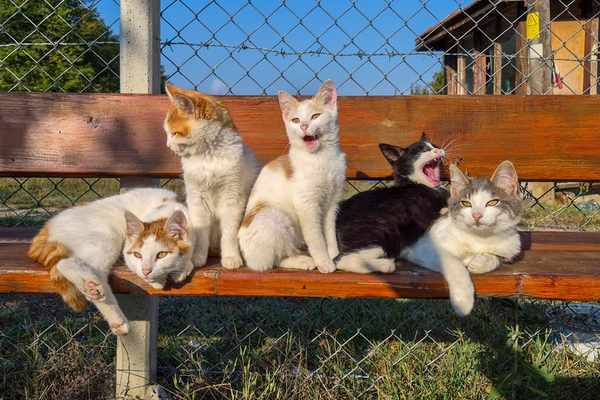
One cat reaches the sofa first. Another waits until the hallway is clear before heading to dinner. It can look as though someone is “in charge,” but cat social hierarchy is rarely a simple ranking from boss to follower. Cats manage relationships through familiarity, personal space, routines, and access to resources. What looks like obedience may simply be a way to avoid confrontation.
Understanding these negotiations makes it easier to recognize friendships, spot hidden tension, and help several cats share a home.
Do Cats Actually Have a Social Hierarchy?
Cats can develop predictable patterns of who gives way to whom, especially in particular situations. Researchers have observed these patterns in some free-ranging groups. However, not every household has an alpha cat commanding the others. The 2024 American Association of Feline Practitioners intercat tension guidelines explain that feline social organization is shaped by familiarity, age, and affiliations rather than a rigid dominance ladder.
A confident cat might claim a sunny windowsill in the morning yet retreat when another approaches the food area. Priority changes with location, motivation, health, and the individuals involved. Describing one animal as dominant everywhere misses that flexibility.
Most importantly, repeated conflict does not mean cats need to establish their rank. It may reflect competition, fear, inadequate escape routes, or disrupted relationships.
Friendship Matters More Than Rank
Domestic cats can live alone, but some form lasting social bonds. In free-ranging colonies, related females may share space and cooperate in caring for kittens, especially where food is concentrated. Not every cat joins such a group, and sharing a food source does not automatically make cats friends.
Inside a home, feline social behavior can be equally selective. Two cats may enjoy each other’s company while a third prefers independent routines. A household of three cats might contain a bonded pair and one separate individual rather than one harmonious group.
How Cats Show That They Belong Together
Friendly cat relationships are revealed by voluntary, relaxed contact. Cats may rub against each other, groom one another, sleep touching, or approach with tails held upright. These behaviors can maintain familiar bonds. Mutual grooming does not prove that one cat outranks the other.
Look for patterns over time. Cats that sleep in the same room but never initiate friendly contact may simply tolerate each other. For more detail on relaxed and uncomfortable signals, explore cat body language.
Space and Resources Shape Cat Group Dynamics
Much of feline social organization involves deciding when to approach, wait, or move elsewhere. Food bowls, litter trays, doorways, resting spots, and human attention can become points of competition. Cats need not fight over these things for a problem to exist.
Imagine two cats sharing a kitchen. One sits silently beside the only doorway while the other waits in the hall, hungry but reluctant to pass. The seated cat never hisses or swats, yet its position controls access. Calling this a leadership dispute overlooks the real issue: the waiting cat needs another safe route to food.
Separation matters as much as quantity. Three bowls lined up together may function like one contested feeding station. Bowls in different rooms offer a more meaningful choice, especially for cats from different social groups.
Scent and Distance Are Part of the Conversation
Cats use scent from facial rubbing, scratching, and other marking behaviors to gather and leave information. Familiar smells can support security, while unfamiliar odors prompt caution. Scent alone cannot identify the “highest-ranking” cat.
Distance also communicates. A cat may turn away, take a wider path, or retreat to a perch instead of confronting another. Avoidance can prevent conflict; it is not necessarily weakness.
How to Recognize Hidden Tension
Not all intercat tension involves fighting. Watch for repeated staring, blocking stairs or doorways, chasing a housemate trying to leave, or displacing another cat from resting places. An affected cat may hide, move only when the other is asleep, or avoid a litter tray.
Changes in appetite, toileting, or activity also deserve attention because illness or pain can alter social behavior. If tension appears suddenly or a cat seems unwell, arrange a veterinary assessment rather than assuming the animals are sorting out their hierarchy. Understanding signs of stress in cats can help owners notice smaller changes.
Comfortable play often includes alternating roles and both cats willingly returning. One-sided chasing, particularly when the chased cat hides, suggests a different situation.
Helping Cats Share a Home Peacefully
The answer to a strained relationship is not to make cats “work it out.” Adjust the environment so each can meet essential needs without passing a rival. Feline environmental guidelines recommend multiple, separated locations for feeding, drinking, toileting, scratching, resting, and play.
Place feeding stations apart, add litter trays in distinct accessible areas, and offer elevated perches with more than one escape route. A common starting point is one litter tray per cat plus one extra, although placement and preference matter more than arithmetic. Avoid corners where a cat could be trapped.
Offer individual play sessions if one cat monopolizes toys or attention. Avoid punishment, forced face-to-face meetings, and attempts to impose rank; these can increase fear.
For example, if a cat regularly guards the stairs at bedtime, add a resting spot and water station on the other floor. Open a second route where possible, then observe whether the hesitant cat moves more freely. This addresses access rather than labeling either animal a bully or subordinate.
When introducing a newcomer, build scent familiarity gradually and use controlled meetings rather than immediate free access. Some cats ultimately prefer separate areas. A guide to introducing a new cat can help with the process.
What About Outdoor Cats?
Free-ranging groups sometimes show recurring priority relationships, but kinship, food availability, reproductive status, and circumstances affect them. Some cats associate closely; others visit feeding sites while maintaining distance. Outdoor cats can often walk away from unwanted encounters, whereas indoor companions have fewer options. That difference makes household layout especially important.
Frequently Asked Questions
Is there an alpha cat in every household?
No. One cat may be bolder or reach a favored spot first, but this does not establish a universal alpha role. Relationships are often situation-specific.
Does grooming mean one cat is dominant?
No. Grooming between cats often reflects a social bond. Consider whether both cats remain relaxed and willingly participate.
Why does one cat always move away from another?
Moving away may be peaceful avoidance. However, repeated retreat from food, water, litter, or resting areas can indicate tension and a need for separated resources.
Can cats that dislike each other learn to coexist?
Sometimes. Slow introductions, sufficient space, and predictable routines may improve tolerance. Not every pair becomes bonded; persistent aggression may require veterinary behavioral support.
What Cat Social Hierarchy Really Tells Us
Cat group dynamics make more sense as changing relationships than as a contest for a throne. Notice who chooses contact, who avoids whom, and where resources create friction. Supporting choice and safe distance often improves harmony far more than deciding which cat is “in charge.”