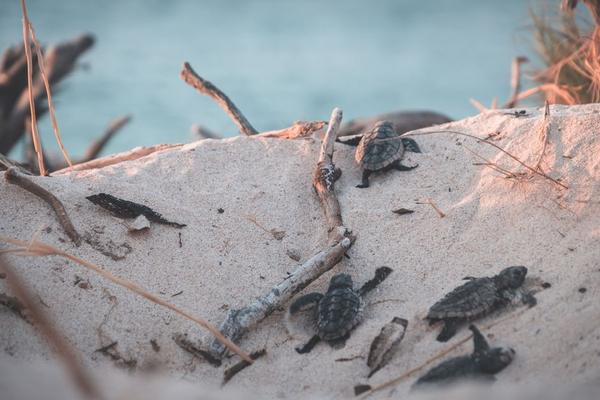
Every spring, a remarkable journey ends on American beaches. Female sea turtles emerge from the surf, cross the sand and bury their eggs before returning to the ocean. Weeks later, tiny hatchlings may emerge from those same shores. Yet sea turtle nesting season in the United States does not follow one national calendar. Its timing depends on the species, coastline and local conditions.
A turtle laying eggs in Texas in April and a hatchling crossing a North Carolina beach in September represent different stages of the same reproductive cycle.
When Is Sea Turtle Nesting Season in the United States?
Across much of the southeastern United States, nesting begins in spring and continues through summer. Hatchlings generally emerge weeks later, extending activity into autumn. Wildlife agencies often use longer protection periods than the peak egg-laying months to account for early nests and late hatchlings.
Florida’s recognized nesting season generally runs from March through October. On North Carolina’s Outer Banks, most nesting occurs from May through September. Along the Texas coast, Kemp’s ridleys commonly nest from April through mid-July. Hawaii has different patterns, including a longer season for its endangered hawksbills.
How Nesting Dates Vary by Region
Florida: Early Arrivals and a Long Season
Florida is a major nesting center for loggerheads, especially along its Atlantic coast. Leatherbacks often arrive first, primarily nesting from March through July. Loggerheads commonly nest from April through September, while green turtles also use Florida beaches during warmer months. Overlapping schedules explain why marked nests remain on some beaches into autumn.
At dawn, survey teams examine flipper tracks leading from the ocean toward the dunes. These tracks reveal nesting attempts even after the female has returned offshore.
Georgia and the Carolinas: Summer Nesting Beaches
Loggerheads are the main nesters on Georgia and Carolina beaches. Activity increases in late spring and summer, and many sea turtle hatchlings emerge in late summer or early fall. At Cape Hatteras National Seashore, the National Park Service identifies May through September as the principal nesting period.
A June visitor might notice a newly marked nest, while someone returning in September could find signs of emerging hatchlings. Those are stages of one season rather than separate events.
Texas: Daytime Nesting by Kemp’s Ridleys
Padre Island National Seashore is an important US nesting site for Kemp’s ridley turtles. Unlike most sea turtles, these animals often nest during the day. Their Texas nesting period typically runs from April into mid-July, although dates vary.
Daytime nesting creates risks where beach driving is permitted. Turtles can blend into windblown sand, so drivers must follow posted rules and remain alert for wildlife.
Hawaii and US Island Territories
The national picture extends into Pacific and Caribbean waters. Hawaiian green turtles nest largely on remote northwestern Hawaiian Islands. The rarer Hawaiian hawksbill nests on a limited number of main-island beaches; at Hawaiʻi Volcanoes National Park, nesting can extend from late May through December. Suitable beaches in Puerto Rico and the US Virgin Islands also support reproduction, with timing influenced by species and climate.
Which Species Are Nesting?
Loggerheads dominate many southeastern Atlantic nesting beaches. Florida regularly hosts green turtles and leatherbacks as well. Kemp’s ridleys are associated with Texas, although their primary nesting grounds are in Mexico. Hawksbills are uncommon nesters on the continental mainland but use Hawaiian and Caribbean habitats.
Each species has distinct migrations and habitat preferences. Learning about different types of sea turtles makes it easier to understand why nearby coastal destinations can have different calendars.
What Happens When a Female Comes Ashore?
A female generally climbs above the wet sand, selects a suitable location and digs an egg chamber with her rear flippers. She lays her eggs, covers the chamber and returns to the water. Many nests contain roughly 80 to 120 eggs, although counts vary by species and individual.
A female may lay several clutches in one season, often spaced about two weeks apart, without necessarily nesting every year. Not every trip ashore produces eggs. A female might turn back, leaving a track called a false crawl. Scientists record these attempts alongside successful nests.
Nesting is only one chapter of the sea turtle life cycle. Most of these animals spend decades at sea, while adult females return to land for reproduction.
Why Hatchling Season Comes Later
Eggs incubate beneath the sand for roughly six to ten weeks, depending on species and conditions. Consequently, summer nests may produce hatchlings in autumn. Nesting season and hatchling season overlap, but they are not identical.
Sand temperature also helps determine hatchling sex: warmer conditions generally produce more females, while cooler sand generally produces more males. That makes nest temperatures important to long-term population health.
Hatchlings usually emerge together, often after dark, and orient toward the naturally brighter horizon over the ocean. Lights from buildings, vehicles and phones can draw them inland instead. Understanding how sea turtle hatchlings find the ocean explains why dark beaches matter so much.
How to Protect Turtle Nesting Beaches
The simplest rule is to give turtles room. Never touch eggs, dig into nests, handle hatchlings or stand between a nesting female and the water. Avoid flash photography, fill holes in the sand, remove beach furniture and respect barriers and pet restrictions. At beachfront properties, turn off unnecessary exterior lights and follow local turtle-friendly lighting guidance.
For example, if you discover a roped-off nest on a Florida beach in July, do not move its markers even if the sand looks undisturbed. Eggs could be developing below the surface. If you see a stranded turtle or hatchlings moving toward a road, contact local park staff or wildlife authorities rather than attempting an untrained rescue.
Many destinations offer supervised turtle walks and educational programs. These are better options than independently approaching nesting turtles at night.
Frequently Asked Questions
What month do sea turtles begin nesting in the US?
Some Florida leatherbacks begin around March, while loggerheads on many southeastern beaches become active later in spring. Texas Kemp’s ridleys commonly begin in April. There is no universal start month.
What is the best time to see nesting turtles?
Late spring through midsummer is often a useful window on southeastern beaches, but sightings cannot be guaranteed. Check with local parks for authorized guided viewing opportunities.
How long does it take for sea turtle eggs to hatch?
Many nests hatch after approximately six to ten weeks. Temperature and species influence the timing, and hatchlings may remain underground briefly before emerging.
Do all sea turtles lay eggs at night?
No. Most species generally nest at night, but Kemp’s ridley turtles often nest during daylight, especially along the Texas coast.
Why the Season Matters
Sea turtle nesting season in the United States is a moving sequence of arrivals, buried eggs and hatchling journeys. From Florida’s early leatherbacks to Texas’s daytime Kemp’s ridleys and Hawaii’s rare hawksbills, every region has a different rhythm. Respecting nests, keeping beaches dark and giving turtles space help protect these coastal nurseries for generations.