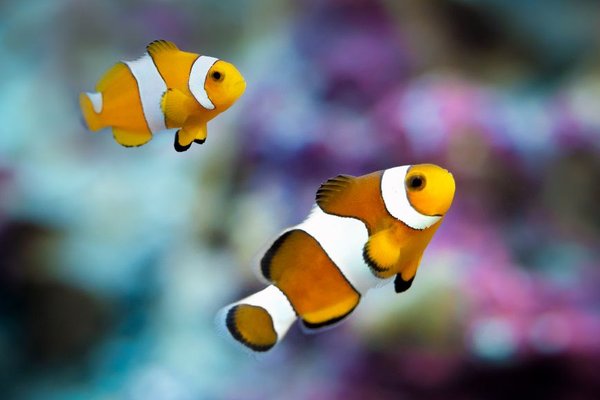
Clownfish are often the fish that inspire someone to try a saltwater aquarium. Their bright colours and curious behaviour are appealing, but their reputation for being easy needs context. They are relatively forgiving marine fish, not freshwater fish that happen to tolerate salt. This clownfish care guide covers the choices that matter most: stable water, sensible feeding and compatible companions.
Choose the Right Clownfish
For a first marine aquarium, captive-bred ocellaris clownfish (Amphiprion ocellaris) or true percula clownfish (Amphiprion percula) are sensible choices. Both generally stay around 10 cm (4 inches) or less and are usually calmer than larger relatives. Maroon and tomato clownfish can become much more territorial, so their care requirements are not interchangeable.
Ask the retailer for the scientific species name and whether the fish were captive-bred. Unusual designer colour patterns do not necessarily mean a different species.
Clownfish Tank Size and Equipment
A 20-gallon (about 75-litre) tank is a practical starting point for one or two small ocellaris or percula clownfish. A 30-gallon tank or larger offers beginners additional stability and room for carefully selected neighbours. Published minimums vary, so choose extra water volume whenever space and budget allow. It reduces the speed of temperature and chemistry swings.
Provide a heater, thermometer, biological filtration, moderate circulation, a secure lid and rockwork with sheltered areas. A protein skimmer can help control dissolved waste but is not essential to every lightly stocked fish-only aquarium. Position pumps so fish can swim comfortably without fighting a constant jet.
Both fish-only and beginner reef aquariums can work. Corals introduce extra lighting and water-chemistry requirements. A beginner reef aquarium setup guide is worth reading before adding invertebrates.
Cycle the Aquarium Before Adding Fish
Newly mixed saltwater is not automatically safe for clownfish. The filter needs beneficial bacteria that process toxic ammonia into nitrite and then nitrate. Use a fishless cycling method and suitable test kits to confirm the system can process waste without leaving detectable ammonia or nitrite. Add fish gradually once the cycle is established.
Imagine a new 30-gallon tank with attractive rock and crystal-clear water. It may look ready after two days, but clarity reveals nothing about biological filtration. A saltwater aquarium cycling guide and reliable test results are more useful than an arbitrary waiting period.
Water Quality and Clownfish Salinity
For common captive-bred clownfish, keep temperature around 24–26°C (75–79°F), with pH generally around 8.0–8.3. Ammonia and nitrite should remain at zero. Control nitrate through responsible stocking, feeding and water changes. Coral aquariums may require tighter nutrient management than fish-only systems.
Clownfish salinity is commonly maintained at a specific gravity of about 1.020–1.025, checked with a calibrated refractometer or hydrometer. Many reef aquariums operate near 1.025–1.026 to accommodate invertebrates. Avoid repeated abrupt adjustments to chase a tiny numerical difference.
Mix appropriate marine salt with purified freshwater, not table salt. Evaporation removes water but leaves salt behind, so top off with freshwater. Match temperature and salinity during water changes. A guide to mixing saltwater for aquariums can help avoid common beginner errors.
Clownfish Feeding Without Overfeeding
Clownfish are omnivores. A high-quality marine pellet or flake can provide the staple diet, supplemented with frozen mysis shrimp, enriched brine shrimp and other suitable marine foods. Some algae-based food adds variety. Feed small amounts once or twice daily, ideally only what the fish eat within a few minutes.
New arrivals may initially prefer smaller portions. If food repeatedly settles behind rockwork, offer less. Excess food decomposes, increases nutrients and can make otherwise sound filtration struggle. A balanced routine beats occasional large meals.
Pairs, Hierarchy and Territorial Behaviour
Clownfish form a size-based hierarchy. In a settled pair, the larger dominant fish is female and the smaller is male. Two compatible juveniles of the same species can often establish a pair naturally. Some chasing is expected, but constant cornering, injuries or an inability to eat require intervention.
Even peaceful ocellaris may defend a rock or aquarium corner. Keeping several clownfish in a modest tank is riskier than keeping one or a pair, particularly as they mature. A bonded pair can become more defensive when breeding.
Do Clownfish Need an Anemone?
No. Clownfish and anemones form a famous partnership in the wild, but captive-bred clownfish can live healthy lives without one. Some choose rockwork, a coral or an aquarium corner as their preferred territory.
Anemones need mature, stable systems, appropriate lighting and space. Some move around the aquarium and risk contact with unprotected pump intakes. Not every anemone suits every clownfish species, and even compatible fish may ignore one. Never force a clownfish into an anemone.
Choosing Clownfish Tank Mates
In a sufficiently large, established community aquarium, peaceful gobies, certain blennies and suitable cardinalfish may make good clownfish tank mates. Check each species’ adult size, feeding needs and temperament. Compatibility also depends on available hiding places and territory.
Avoid casually combining different clownfish species in a small tank. Aggressive damselfish, predators and timid fish that cannot escape a protective pair are poor choices. Clownfish generally coexist with many reef invertebrates, but territorial displays can still disturb other residents.
Daily and Weekly Maintenance
Watch feeding, breathing and behaviour daily. Check temperature and salinity regularly, then test ammonia, nitrite, nitrate and pH at least weekly, particularly after stocking changes. Make partial water changes according to test results and tank needs. Clean filter media gently without wiping out its beneficial bacteria.
Record results so trends are visible. Rapid breathing, white spots, excessive mucus, frayed fins, scratching or persistent appetite loss deserve attention. Check water immediately and seek advice from an aquatic veterinarian or marine specialist rather than adding medication indiscriminately to a reef tank.
Frequently Asked Questions
Are clownfish suitable for beginners?
Captive-bred ocellaris and percula are approachable marine species when the aquarium is fully cycled and water conditions are steady. They are not suitable for an unprepared or newly filled tank.
Can clownfish live alone?
Yes. A single clownfish can live successfully without a partner. A pair provides social interaction but also creates a hierarchy that needs monitoring.
How often should clownfish be fed?
Usually once or twice daily in small, varied portions. Adjust amounts to appetite and water-quality results, avoiding leftovers.
Will clownfish automatically use an anemone?
No. Even captive-bred clownfish offered a suitable host may ignore it. An anemone is optional and has separate care requirements.
Keep the Setup Stable and the Stocking Sensible
A successful clownfish aquarium does not need elaborate decoration or a host anemone. Begin with a cycled tank, choose a modest stocking plan and maintain stable water. Feed varied food without excess, respect territorial behaviour and add reef animals only when the system is ready. Those decisions let clownfish become the lively centrepiece of a healthy marine aquarium.