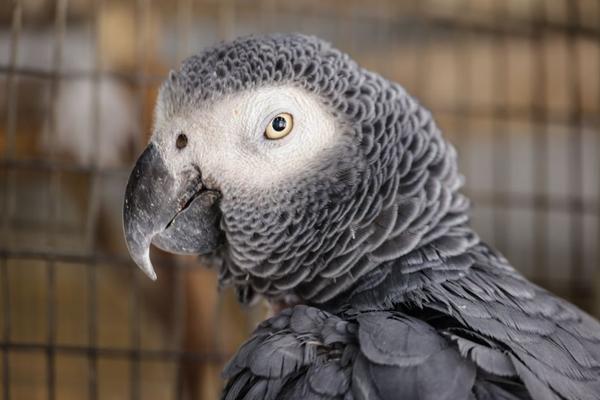
African grey parrots are famous for their intelligence, speech, and ability to notice small changes in a household. That same awareness makes African grey parrot care more demanding than simply providing a cage, food bowl, and a few toys. These birds thrive on consistency, choice, mental work, and calm social contact. A good routine should support physical health while giving the bird safe ways to explore, forage, chew, communicate, and rest.
Build care around a predictable daily rhythm
African greys often do best when the broad shape of the day is predictable. Meals, out-of-cage time, training, quiet periods, and bedtime do not need to happen to the minute, but a steady routine can make the environment easier to understand. Introduce major changes in people, room layout, noise, or handling gradually when possible.
Social interaction matters, but constant attention is not the goal. A grey should also learn to play or forage independently. Short positive-reinforcement sessions provide mental exercise while teaching useful behaviors such as stepping up, entering a carrier, or returning to a perch.
Get the African grey diet right
A seed-heavy diet is one of the most important problems to avoid. African greys are particularly associated with calcium-related nutritional problems when fed poorly balanced, predominantly seed-based diets. Current veterinary guidance generally favors a nutritionally complete formulated pellet as the foundation of the diet, with vegetables and smaller amounts of fruit and other appropriate foods adding variety.
For many adult parrots, pellets make up roughly three-quarters or more of the daily diet. The exact balance should be adjusted with an avian veterinarian. Dark leafy greens, peppers, carrots, squash, and other varied vegetables add useful nutrients and textures. Fruit is better treated as a smaller portion because it is relatively high in sugar.
Fresh water should always be available, and bowls should be washed daily. Remove moist foods before they spoil. Avoid avocado, chocolate, caffeine, alcohol, and heavily salted or fatty foods. Do not add calcium, vitamin, or mineral supplements simply because African greys can be prone to deficiencies; unnecessary supplementation can also cause problems.
If a bird currently eats mostly seed, do not abruptly remove its familiar food and assume it will eat pellets. Some parrots do not immediately recognize a new food as edible. A practical approach is to introduce pellets alongside the current diet, monitor morning weight on a gram scale, and increase the new food only after confirming the bird is actually eating it.
Choose an African grey cage for movement
An African grey cage should be large enough for the bird to stretch and flap its wings, move comfortably between perches, climb, and interact with toys without constantly brushing its tail or wings against bars. Bigger is generally better, provided bar spacing is safe and the enclosure is well constructed. Rectangular cages are usually more practical than round decorative cages.
Use bird-safe perches with different diameters and textures rather than relying on identical smooth dowels. Natural wood perches can help vary foot pressure. Position perches so droppings do not fall directly into food or water.
Place the cage where the grey can observe household life without sitting in the busiest traffic path. Keep it away from kitchens and sources of smoke, aerosols, scented fumes, overheated nonstick cookware, and other airborne irritants. African greys produce significant feather dust, so good ventilation and regular cleaning matter.
Make parrot enrichment part of the routine
For an intelligent parrot, enrichment is daily care rather than an occasional extra. Rotate safe chewable toys, puzzle feeders, shredding materials, climbing opportunities, and supervised foraging activities. The objective is not to cram the cage with objects, but to create several ways for the bird to make choices and work for rewards.
One simple foraging activity is to hide part of the normal food ration in folded paper or an easy bird-safe puzzle. Start with the food partly visible so the bird learns the game. African greys can be cautious about unfamiliar objects, so new toys may be better placed near the cage before being moved inside. Never force a frightened bird to interact with a novel item.
Useful related topics for internal reading include pet bird nutrition, choosing a parrot cage, and parrot enrichment ideas.
Protect sleep and quiet time
Most companion birds benefit from a consistent night with roughly 10 to 12 hours of quiet, dark, largely uninterrupted sleep. Late television, bright lights, or household activity beside the cage can disturb rest. If the main living area stays active late, a separate sleep cage or quieter room may work better.
Daytime naps can be normal, but a bird that suddenly becomes unusually sleepy, stops interacting, sits fluffed for long periods, loses appetite, breathes differently, or shows other abrupt changes should be assessed promptly by an avian veterinarian.
Keep social interaction balanced
African greys need regular interaction, yet overdependence on one person can make everyday life harder. Encourage calm contact with more than one trusted household member where appropriate, and teach independent play. Petting is generally safest around the head and neck; repeated touching over the back or body can encourage sexual behavior in some parrots.
Out-of-cage time should happen in a bird-safe area with supervision. Windows, mirrors, ceiling fans, open doors, hot surfaces, electrical cords, toxic plants, and other pets can create hazards. A play stand gives the bird a clear destination outside the cage.
Plan preventive veterinary care
Arrange an examination with a veterinarian experienced in avian medicine when bringing home a new African grey, then maintain regular preventive checkups. Keeping a simple record of body weight, diet changes, and unusual behaviors can make appointments more informative.
Frequently asked questions
Are African grey parrots difficult to care for?
They can be demanding because they need daily social contact, mental stimulation, a carefully managed diet, safe housing, and a stable routine. They are usually a better fit for owners who can commit consistent time and attention for many years.
What should an African grey eat every day?
A nutritionally complete formulated diet should usually form the majority of the menu, supported by varied vegetables and smaller amounts of fruit and other suitable foods. Seed should not be the main diet. Individual needs should be discussed with an avian veterinarian.
How much sleep does an African grey need?
A consistent schedule providing about 10 to 12 hours of quiet, dark sleep works well for many companion birds. The environment should minimize repeated nighttime disturbance from lights, television, or household activity.
How do I keep an African grey mentally stimulated?
Use a mix of foraging, safe chewing, puzzle feeding, positive-reinforcement training, climbing, toy rotation, and supervised time outside the cage. Introduce new items gradually because many greys are cautious about unfamiliar objects.
A good routine is the foundation of long-term care
Effective African grey care comes from combining nutrition, housing, enrichment, sleep, social interaction, and preventive veterinary care into one consistent routine. These parrots do not need nonstop entertainment, but they do need meaningful choices and an environment that respects their intelligence and sensitivity. When the bird can eat well, move comfortably, forage, learn, rest undisturbed, and interact without pressure, everyday care becomes more predictable for both the parrot and the people sharing its home.