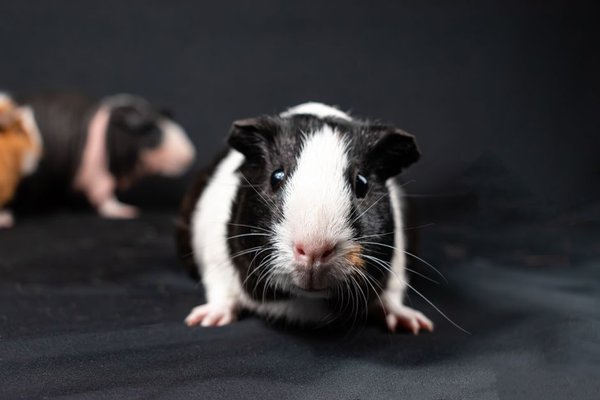
Content guinea pigs tend to be curious, social, interested in food and comfortable enough to relax. Some signs are obvious, while others are as subtle as relaxed resting or choosing to sit near a companion.
Guinea pig body language always needs context. One sound or movement rarely tells the whole story. Look for a pattern of relaxed, normal guinea pig behavior rather than relying on a single signal.
1. Popcorning During Play or Excitement
Guinea pig popcorning is one of the clearest signs of excitement. A guinea pig may spring into the air, twist slightly, land and race off before doing it again. Young guinea pigs often do it more, but adults can too.
Context matters because sudden jumping can also occur during a startled dash. If the guinea pig quickly returns to exploring, eating or socializing normally, positive excitement is the more likely explanation.
2. Wheeking When Something Good Is Coming
The loud “wheek-wheek” is often linked with anticipation. Many learn the sound of a vegetable bag, fridge door or familiar footsteps before food arrives. Wheeking can also seek attention or contact.
If your guinea pig approaches eagerly and follows the sound with normal eating or interaction, it is usually part of an enthusiastic routine. Learning individual guinea pig sounds helps you distinguish an excited wheek from a sharper squeal associated with fear or pain.
3. Relaxed Purring or Soft Chutting
A low, relaxed purr or soft chutting sound can accompany calm exploration or comfortable social contact. However, not every vibrating sound means happiness. Guinea pigs may also produce similar sounds when annoyed or uncertain.
Watch the body too. A loose posture and normal movement support a positive interpretation. Stiffness, teeth chattering or attempts to move away suggest a different mood.
4. Curious Exploring and Foraging
Sniffing, moving through tunnels, searching through hay and checking new safe objects are healthy expressions of natural guinea pig behavior.
For a practical test, scatter a small portion of the usual vegetables or pellets through clean hay instead of serving everything in one bowl. Confident searching suggests they feel secure enough to explore.
5. Eating With a Steady, Healthy Appetite
A consistent appetite is an important everyday sign that things are going well. A healthy guinea pig usually approaches familiar food readily and maintains its normal grazing routine.
Appetite is also a health clue. Eating less, refusing food or producing fewer droppings can indicate illness and deserves prompt veterinary attention. Knowing your pet’s normal routine makes these changes easier to spot.
6. Choosing to Spend Time Near a Companion
Guinea pigs are social animals and normally benefit from suitable guinea pig companionship. Positive social behavior can include resting near one another, calmly following each other, eating close together and communicating without escalating into aggression.
They do not need to be touching constantly to be bonded. Related reading such as guinea pig bonding and introductions can help you understand healthy group dynamics.
7. Resting in Comfortable Positions
When a guinea pig feels secure, you may see it rest with its body loosened, legs tucked comfortably or occasionally stretched out. Some even nap outside a hide in a quiet enclosure.
Do not worry if yours prefers sleeping under cover. Guinea pigs are prey animals, so hiding is normal. The positive sign is choice: a relaxed guinea pig moves between shelter, food, social areas and open space without seeming constantly frightened.
8. Approaching You Voluntarily
A guinea pig that comes to the enclosure edge, sniffs your hand or waits nearby when you enter the room is showing confidence in the routine. Many guinea pigs prefer interaction at ground level.
Build trust by moving slowly, speaking softly and offering food from your hand without chasing. Voluntary approaches are a more meaningful sign of comfort than forced cuddling.
9. Confident Zoomies and Active Movement
Short bursts of energetic running, often called zoomies, can accompany excitement and play. It may race around a familiar route, dash through tunnels and then stop to eat or explore.
Healthy activity should look coordinated and purposeful. Safe floor space, tunnels and hideouts with more than one exit encourage movement without making guinea pigs feel trapped. A guinea pig cage and habitat guide can help you plan useful space rather than simply adding more accessories.
10. A Consistent Daily Routine
The strongest sign of contentment is often consistency. Your guinea pig eats, explores, vocalizes, rests, interacts and uses hiding places in a familiar pattern. That baseline helps you notice early warning signs.
For example, a guinea pig may normally wheek at breakfast, forage through the morning, nap near a companion and approach for an evening treat. If it suddenly stays hunched in a hide and ignores food, that change matters. A guinea pig stress signs guide can help you compare normal caution with behavior that needs closer attention.
How to Encourage Happy Guinea Pig Behavior
Happiness is easier to see when the environment supports natural behavior. Provide constant access to good-quality hay and fresh water, an appropriate diet, enough exercise space, safe hiding places, tunnels, chewable enrichment and compatible guinea pig company. Keep handling gentle and let guinea pigs choose whether to approach or retreat.
One guinea pig may celebrate dinner with loud wheeks and popcorning, while another shows contentment by quietly exploring and settling near a companion.
Frequently Asked Questions
How can I tell if my guinea pig is happy or scared?
Look at the whole pattern. Happy guinea pigs generally eat normally, explore, interact and relax between activities. Fear is more likely to involve persistent hiding, freezing, frantic escape attempts, tension or a sudden change from normal behavior.
Does purring always mean a guinea pig is happy?
No. A low, relaxed purr can occur during calm moments, but guinea pigs can also make vibrating sounds when uncomfortable or annoyed. Pair the sound with body posture and the situation.
Why has my guinea pig stopped popcorning?
Some guinea pigs popcorn less as they get older, so stopping does not automatically mean unhappiness. Focus on appetite, activity, social interaction and routine. A sudden wider behavior change should be discussed with a vet.
Do guinea pigs show affection to people?
They can show trust by approaching voluntarily, taking food gently, resting nearby and staying relaxed during calm interaction. Preferences vary, and many guinea pigs feel safer with four feet on the ground than when being picked up.
Conclusion
The clearest signs of a happy guinea pig come from a combination of behavior: popcorning, familiar wheeks, curious foraging, relaxed resting, steady eating, friendly social contact and confidence in everyday routines. Rather than decoding every noise in isolation, learn what is normal for your own guinea pigs. That baseline helps you recognize genuine contentment and meaningful changes that could signal stress or illness.