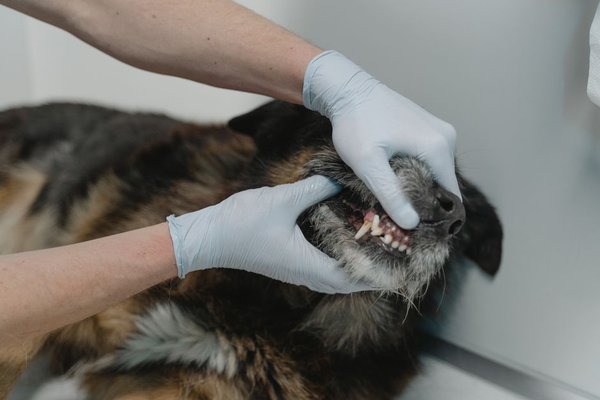
Healthy teeth are easy to overlook until a dog develops bad breath, sore gums, difficulty chewing, or a loose tooth. By then, disease may already have progressed below the gumline. Consistent dog dental care at home can slow plaque buildup and support gums between veterinary visits.
Home care does not replace professional treatment when disease is present. Its purpose is to remove plaque before it hardens into tartar and contributes to periodontal disease.
Why Dog Dental Care Matters
Plaque is a soft bacterial film that forms on teeth. If it is not removed, minerals in saliva can turn it into hardened calculus, often called tartar. Bacteria and inflammation around the gumline can then damage the tissues supporting the teeth.
Dog gum disease usually begins with gingivitis, when gums become red or swollen. Untreated periodontal disease can progress to attachment and bone loss. Much of that damage occurs below the gumline, so a mouth that looks only mildly dirty can hide more advanced disease.
Dog Teeth Brushing Is the Best Home Routine
Veterinary dental organizations consider regular tooth brushing the most effective form of home plaque control. Daily brushing is ideal, although brushing several times a week is still more useful than doing nothing.
Choose the Right Toothbrush and Toothpaste
Use a soft-bristled pet toothbrush or another small, soft brush that fits your dog’s mouth comfortably. Use toothpaste made specifically for dogs. Human toothpaste is not appropriate because dogs swallow rather than rinse, and some ingredients may be unsafe for pets.
Introduce Brushing Gradually
Do not expect a dog that has never had its mouth handled to accept full brushing immediately. Start by touching the muzzle and lifting the lips for a few seconds, then reward calm behavior. Next, let the dog taste a small amount of pet toothpaste. When that is comfortable, rub the outer tooth surfaces gently with a finger or soft cloth before introducing the brush.
Short sessions usually work better than forcing a long one. Building a routine over several days or weeks is more valuable than creating a stressful experience that makes the dog avoid future handling.
Focus on the Outer Tooth Surfaces
Plaque and tartar often build up quickly on the cheek-facing surfaces of the upper teeth. Lift the lip and angle the bristles toward the gumline, using small gentle motions. Work gradually from the front teeth toward the premolars and molars.
You do not need to pry the mouth wide open. Many dogs tolerate brushing better with the mouth closed while the lips are lifted. Try to reach all accessible surfaces, but consistent cleaning of the outer surfaces is a practical starting point.
How to Create a Routine That Actually Lasts
Attach brushing to something that already happens every day, such as the evening walk or bedtime routine. Keep the brush and toothpaste in the same place and follow the session with praise, play, or another reward.
For example, a dog that resists a full session might begin with five seconds of brushing on one side of the mouth each evening. After several calm days, increase the time and add the other side. Within a few weeks, many dogs will tolerate a much more complete brushing routine.
Consistency matters more than perfection. Missing one day does not ruin the routine; simply resume at the next opportunity.
Do Dental Chews for Dogs Really Help?
Dental chews can be useful as a supplement to brushing, but products vary greatly. Some have evidence that their shape, texture, or ingredients reduce plaque or tartar when used as directed. The Veterinary Oral Health Council evaluates submitted evidence and awards its seal to products that meet its standards for plaque or tartar control.
When choosing dental chews for dogs, use a size appropriate for your dog’s body weight and chewing style. Supervise chewing, especially with a new product. A chew that is swallowed in large pieces or is too hard for the individual dog can create its own problems.
Dental diets, water additives, oral gels, and wipes may also carry VOHC acceptance. They can help dogs that resist brushing, but ask a veterinarian for guidance if dental disease is already present.
Products and Habits to Be Careful With
More aggressive cleaning is not necessarily better. Very hard objects can fracture teeth, especially in powerful chewers. Avoid scraping tartar from teeth at home with metal instruments, because visible calculus is only part of the problem and accidental injury to the gums or enamel is possible.
Bad breath should not simply be covered with flavored sprays. Persistent odor can be a sign of dental disease or another medical issue. Home products are most useful for prevention and maintenance, not for disguising pain, infection, loose teeth, or advanced tartar.
Signs Your Dog Needs a Veterinary Dental Check
Book a veterinary examination if you notice persistent bad breath, red or bleeding gums, heavy tartar, loose or broken teeth, swelling around the face, pawing at the mouth, dropping food, chewing on one side, or reluctance to eat hard food.
Dogs often continue eating despite oral pain, so a normal appetite does not guarantee a healthy mouth. Dogs of any size can develop dental disease.
Why Professional Cleaning Is Different
A veterinary dental procedure is not simply a cosmetic tartar removal. Proper professional cleaning includes assessment of the whole mouth and cleaning both above and below the gumline. Dental radiographs may be needed to identify bone loss, root disease, retained roots, or other problems that are invisible from the surface.
Veterinary dental organizations support anesthesia for complete dental assessment and treatment because it allows safe examination, imaging, scaling, polishing, and treatment below the gumline while protecting the patient. Non-anesthetic surface scaling cannot provide the same complete evaluation or treatment.
Frequently Asked Questions
How often should I brush my dog’s teeth?
Daily brushing is ideal because plaque forms continuously. If daily brushing is not realistic, brushing several times a week can still be beneficial. Ask your veterinarian to demonstrate a technique suited to your dog.
Can dental chews replace brushing?
Usually not. Effective dental chews can help reduce plaque or tartar, but brushing remains the gold standard for home care. Chews are best used as part of a broader dental routine.
Can I remove tartar from my dog’s teeth at home?
Do not attempt to scale hardened tartar with dental instruments yourself. Once significant calculus or gum disease is present, your dog needs a veterinary oral examination and may require professional cleaning and treatment.
When should a puppy start dental care?
Begin gentle mouth handling and tooth-brushing training early. Starting when a dog is young can make daily care easier later, while regular veterinary checks help identify retained baby teeth, crowding, or other developing problems.
Make Dental Care Part of Normal Dog Care
The most effective home plan is not complicated: brush regularly, choose evidence-backed dental products when useful, watch for changes in the mouth, and keep up with veterinary examinations. At-home care cannot reverse advanced periodontal disease, but it can slow plaque buildup and help protect teeth and gums between professional visits. A few minutes of consistent care each day can make oral health a routine part of keeping your dog comfortable for the long term.