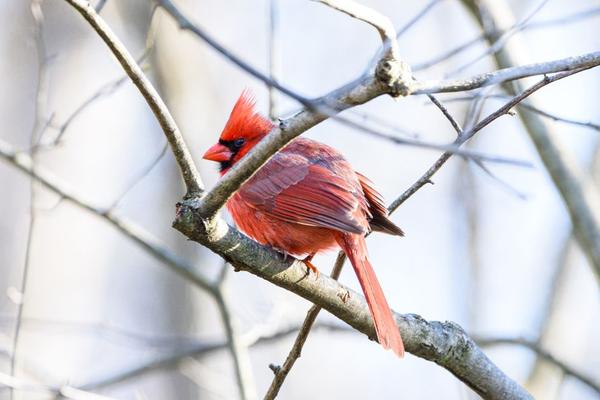
Northern Cardinals are among the easiest backyard birds to recognize once you know which features matter most. The bright red male gets most of the attention, but reliable identification goes beyond color. A pointed crest, thick cone-shaped bill, fairly long tail, and sturdy songbird shape can confirm the species even when the light is poor or the bird is a muted female or juvenile.
The best approach is to identify structure first, then use plumage, behavior, and voice as supporting clues. That method is especially useful at feeders or in dense shrubs, where a flash of red can be misleading.
Start With the Northern Cardinal’s Shape
A Northern Cardinal is a medium-sized songbird, roughly 8 to 9 inches long, with a distinctive silhouette. Look for an upright triangular crest, large rounded head, heavy seed-cracking bill, and long tail. The body looks substantial rather than delicate, especially when the bird is perched at a feeder or on a low branch.
These northern cardinal field marks are more dependable than color alone. A male can appear dark in shade, while a female may look mostly brown from a distance. The crest-and-bill combination usually remains obvious.
The bill is one of the fastest clues
Adult cardinals have a thick reddish-orange to coral-colored bill. Juveniles are different: their bills begin gray to black and become brighter as they mature. That detail is useful when a young cardinal otherwise resembles an adult female.
How to Identify a Male Northern Cardinal
An adult male is brilliant red overall, with a contrasting black face mask around the bill and throat. The red crest, heavy red-orange bill, long red tail, and black facial area create a combination that is difficult to confuse with another common backyard bird.
Color can vary with lighting, feather wear, and molt, so do not reject an identification because a bird is not glowing scarlet. In dull light, a male may look deeper red or slightly brownish in places. Shape and the black mask remain useful confirmation points.
Look-alikes for bright red males
Summer Tanagers and Scarlet Tanagers can also show strong red plumage, but they lack the Northern Cardinal’s prominent crest and oversized cone-shaped bill. In the Southwest, Pyrrhuloxia is a closer look-alike. It is much grayer overall and has a yellowish bill rather than the cardinal’s reddish-orange bill.
Female Cardinal Identification Without Guesswork
Female cardinal identification becomes simple when you stop expecting a red bird. Adult females are mostly warm tan to buffy brown, often with red or reddish highlights in the crest, wings, and tail. They share the male’s pointed crest, strong bill, rounded body, and long tail.
The female’s face may show darker shading around the bill, but the contrast is softer than the male’s black mask. Her bright reddish-orange bill often stands out against the brown plumage and is especially helpful when the bird is partly hidden in a hedge.
Consider a feeder scenario: a brown, crested bird lands below a sunflower-seed feeder. You notice a long tail, warm red flashes in the wings, and a thick orange-red bill. Even without a male nearby, that combination strongly supports a female Northern Cardinal rather than a sparrow or another brown backyard bird.
How Juvenile Northern Cardinals Differ
Young Northern Cardinals can cause confusion because they resemble females in overall color. Juveniles are generally brownish with a developing crest and reddish tones that become more noticeable as they mature. The most useful clue is the bill, which is dark gray to black in young birds instead of the bright adult color.
Juveniles can also look softer, scruffier, or less crisply marked than adults. Rather than relying on one imperfect plumage feature, check the heavy bill, long tail, cardinal-like posture, and nearby adults. Young birds may stay close to parents and give persistent begging calls.
Use Cardinal Behavior as an Identification Tool
Cardinal behavior adds useful context. Northern Cardinals are common in brushy edges, gardens, parks, thickets, and suburban yards where dense vegetation provides cover. They often feed on or near the ground, move through low shrubs, and visit feeders for seeds.
They are frequently seen in pairs, and their strong legs give them a deliberate hopping style when feeding. Cardinals are generally year-round residents across much of their range, so the same individuals may become familiar visitors.
Related topics such as backyard bird identification basics, common feeder birds, and bird-friendly shrubs for backyard cover make natural internal-linking opportunities.
Listen for the Cardinal Call and Song
A bird hidden in foliage may reveal itself by sound first. The most familiar cardinal call is a sharp, metallic chip. Both sexes use calls in several situations, including contact, alarm, territorial encounters, and activity around the nest.
The song is different: a loud series of clear, whistled phrases that may sound like repeated “cheer” or “birdie” notes. Both male and female Northern Cardinals sing. Songs often consist of repeated whistles that speed up or shift into a short trill.
When you hear a metallic chip from a dense hedge, scan for a crest and long tail rather than waiting for a red bird to appear. A brown female may be making the sound.
A Reliable Field Checklist
For fast northern cardinal identification, use the same sequence every time. First confirm the prominent crest and heavy cone-shaped bill. Next check the long tail and medium-sized, sturdy body. Then use plumage to decide whether you are seeing a bright red adult male, a warm brown adult female with reddish accents, or a brownish juvenile with a dark bill. Finally, support the visual identification with habitat, feeder behavior, and the characteristic metallic chip or clear whistled song.
This shape-first method is more reliable than chasing color. It also builds a transferable birding habit: structure tells you what kind of bird you are seeing, while color and sound refine the identification.
Frequently Asked Questions
How can you tell a female cardinal from a juvenile?
Check the bill first. Adult females have a bright reddish-orange bill, while juveniles begin with a dark gray or black bill. Juveniles may also look less crisply marked and are often seen following or begging from adults.
Do female Northern Cardinals sing?
Yes. Both males and females sing clear, whistled songs. Both sexes also use a variety of calls.
What does a Northern Cardinal call sound like?
The most familiar call is a sharp, metallic chip. Their songs are louder and more musical, built from clear repeated whistles that can sound like “cheer” or “birdie.”
What bird is most likely to be confused with a Northern Cardinal?
Red tanagers may confuse beginners, but they lack a crest. In the Southwest, Pyrrhuloxia is a closer structural match; its grayer plumage and yellowish bill help separate it from Northern Cardinal.
Conclusion
Northern Cardinal identification becomes more dependable when you treat color as only one clue. The pointed crest, heavy bill, long tail, voice, and brushy-yard behavior work together across males, females, and juveniles. Learn that underlying shape, then add the red male’s black mask, the female’s warm brown plumage and bright bill, or the juvenile’s dark bill. With those clues in mind, even a quick glimpse through a hedge can be enough to recognize this backyard bird.