Children are naturally drawn to the living world. A bird hopping across the garden, ants moving in a tiny line, a butterfly landing on a flower, or the distant sound of frogs after rain can feel almost magical to them. Long before they understand science in a formal way, children are already asking the right questions. Where does that animal live? What does it eat? Why does it move like that? Is it scared of us?
That curiosity is the perfect beginning for wildlife education for children. It does not have to start with complicated facts or long lessons. In many cases, it begins with noticing. A child who learns to pause and observe a beetle instead of stepping on it is already developing a deeper relationship with nature. Over time, these small moments can shape how children think about animals, habitats, and their own role in protecting the world around them.
Why Wildlife Education Matters Early
Childhood is when attitudes toward nature often begin to form. If children grow up seeing wildlife as strange, dangerous, or unimportant, they may carry that distance into adulthood. But when they are taught to respect animals and understand their place in the environment, wildlife becomes something worth caring about.
Wildlife education helps children see that animals are not just characters in books or background scenery in parks. They are living creatures with needs, instincts, families, and habitats. A squirrel gathering food, a spider building a web, or a bird making a nest can become a real-life lesson in survival, patience, and adaptation.
This kind of learning also builds empathy. Children begin to understand that animals feel stress, need space, and depend on clean water, trees, soil, and safe surroundings. That understanding may sound simple, but it is powerful. It teaches children that kindness is not limited to people.
Learning Through Observation
One of the best ways to introduce wildlife to children is simply to observe it. Children do not always need a full explanation right away. Sometimes they need time to watch, wonder, and form their own questions.
A walk through a park, a few minutes near a pond, or even quiet time by a window can become a small wildlife lesson. Birds, insects, lizards, butterflies, and neighborhood animals can all teach children something. Parents and teachers can guide the moment with gentle questions. What do you notice? How does it move? Where do you think it is going? What might it be looking for?
Observation teaches patience, which is not always easy for young children. Wildlife does not perform on demand. Animals appear, disappear, hide, call, fly away, or stay still. That unpredictability is part of the lesson. Children learn that nature has its own rhythm, and we are visitors in it.
Turning Everyday Places Into Nature Classrooms
A child does not need to live near a forest or national park to learn about wildlife. Nature is often closer than adults think. A backyard, balcony, school garden, roadside tree, empty lot, or local pond can become a classroom when children are encouraged to look closely.
In cities, pigeons, crows, sparrows, bees, ants, moths, and stray leaves after rain all offer chances to talk about ecosystems. In rural areas, children may notice more animals directly, but the same rule applies: the learning becomes meaningful when adults help connect the sighting to a bigger idea.
For example, seeing bees around flowers can lead to a conversation about pollination. Watching birds pick up twigs can introduce nesting. Finding animal tracks in mud can spark curiosity about movement and shelter. These little lessons are memorable because they happen in real life, not just on a page.
Books, Stories, and Imagination
Stories are a gentle doorway into wildlife education, especially for younger children. A beautifully illustrated book about elephants, owls, whales, turtles, or foxes can make distant animals feel familiar. Children often connect emotionally with animals through storytelling before they are ready for detailed facts.
The key is to balance imagination with truth. Animal stories can be charming, but children should also learn that real animals do not behave exactly like humans. A fox is not “bad” because it hunts, and a snake is not “mean” because it protects itself. These distinctions help children move beyond cartoon ideas and develop a more respectful understanding of wildlife.
Reading together also gives adults a chance to answer questions slowly. A child may ask why a turtle has a shell or why some birds migrate. These questions can lead naturally into science, geography, weather, and conservation without making the experience feel like a formal lesson.
Teaching Respect Instead of Fear
Many children are taught to fear wildlife before they are taught to understand it. Some caution is necessary, of course. Children should know not to touch unknown animals, disturb nests, approach wild creatures, or pick up insects without guidance. But fear alone does not create respect. It often creates distance.
A better approach is calm caution. Children can learn that wild animals are not pets. They should be watched from a safe distance. They should not be chased, teased, fed, or handled. Even small creatures deserve space.
This message matters because children sometimes show curiosity through rough behavior. They may try to grab a butterfly, poke an insect, or throw stones near birds without fully understanding the harm. Patient correction can turn these moments into lessons. Instead of only saying “stop,” adults can explain, “That animal is trying to stay safe. Let’s watch quietly.”
The Role of Zoos, Sanctuaries, and Nature Centers
When chosen thoughtfully, wildlife parks, sanctuaries, aquariums, and nature centers can support wildlife education for children. They offer a chance to see animals children may never encounter in daily life. A child who sees a rescued owl or watches sea turtles swim may feel a stronger connection to species that once seemed distant.
Still, the quality of the place matters. Educational value comes from responsible care, conservation messages, and respect for the animals. Children should be encouraged to ask where the animals come from, why they are there, and how people help protect them in the wild.
Visits like these are most meaningful when adults continue the conversation afterward. A day at a nature center can lead to reading more about habitats, drawing favorite animals, or talking about why forests, oceans, wetlands, and grasslands need protection.
Helping Children Understand Habitats
Wildlife education becomes richer when children learn that animals are connected to places. A frog needs more than a body. It needs water, insects, plants, and shelter. A bird needs trees, food, nesting space, and safe migration routes. A fish needs clean water, oxygen, and balance in its environment.
When children understand habitats, conservation starts to make sense. They begin to see why litter matters, why cutting trees affects birds, and why polluted water harms more than what we can see on the surface.
This can be taught in very simple ways. A child can draw an animal’s home, build a pretend habitat with leaves and stones, or compare where different animals live. The point is not to memorize terms. The point is to understand connection.
Encouraging Small Acts of Care
Children feel more involved when they can do something. Small actions help turn learning into responsibility. They can refill a birdbath with adult help, plant flowers that attract butterflies, keep outdoor spaces clean, or help create a quiet corner for insects and birds.
These actions should be simple and age-appropriate. The goal is not to place environmental pressure on children. It is to show them that care can be part of ordinary life. A child who learns not to litter near a pond is practicing conservation in a small but real way.
Over time, these habits grow. Children who care about a garden snail today may become teenagers who care about forests, oceans, and endangered species tomorrow. Early care often starts small.
Using Technology Without Losing the Real World
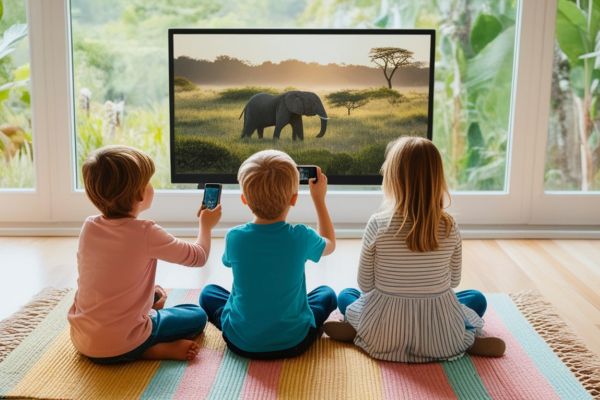
Videos, documentaries, apps, and virtual tours can be useful tools, especially when introducing children to animals from other parts of the world. A child can watch penguins in Antarctica, lions in Africa, or whales in the ocean without leaving home.
But technology works best when it supports real-world curiosity rather than replacing it. After watching a wildlife video, children can be encouraged to step outside and notice local nature too. The message should be clear: amazing wildlife is not only far away. It is also in the tree outside, under a rock, in the soil, and across the evening sky.
Raising Children Who Notice and Care
At its heart, wildlife education for children is about attention. It teaches children to notice life beyond themselves. It invites them to slow down, ask better questions, and treat living creatures with care.
Not every child will grow up to become a scientist, conservationist, or wildlife expert. That is not the only goal. The deeper purpose is to raise children who understand that the natural world is alive, connected, and worth protecting.
When children learn to respect a bird’s nest, watch insects without harming them, and understand why animals need safe homes, they begin to see the world differently. They become more thoughtful, more curious, and often more compassionate. And in a time when nature needs careful hands and open hearts, that kind of learning matters more than ever.