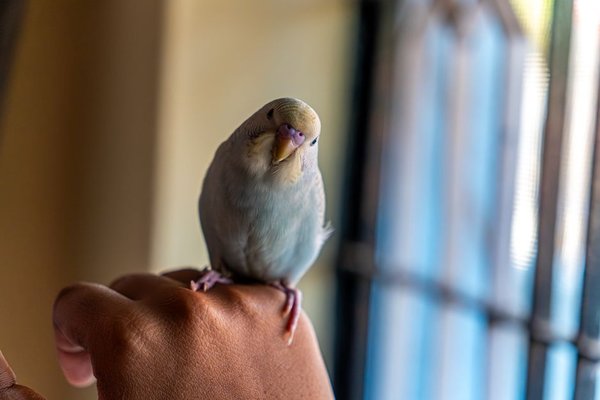
Bringing a budgie home is exciting for people and often overwhelming for the bird. Your budgie is adjusting to a new cage, new sounds, and unfamiliar people. The fastest route to a friendly bird is usually not faster handling, but calmer handling. Successful budgie taming teaches one simple lesson: being near you is safe and rewarding.
Some budgies step onto a finger within days, while others need weeks or longer. Age, previous handling, personality, and environment all matter. Watch for small signs of confidence instead of working toward a deadline.
Start With Safety Before You Start Training
Before trying to hand tame a budgie, give a new bird time to settle into its cage and routine. Place the cage where it can observe normal household activity without constant noise or sudden movement. Approach slowly, speak softly, and avoid unnecessary reaching into the cage.
Good daily care also makes training easier. A secure bird can focus better on interaction. Useful related topics include budgie cage setup, safe foods for budgies, and bird body language.
A Calm Step-by-Step Budgie Taming Routine
Step 1: Become a Predictable, Non-Threatening Presence
Spend quiet time near the cage. Talk, read, or work nearby without staring. Approach at a steady pace rather than appearing suddenly. Over several sessions, your budgie should begin eating, preening, chirping, or playing while you are close. That is a better sign of trust than simply measuring how near you can stand.
Step 2: Teach Your Budgie That Your Hand Brings Good Things
Once the bird stays relaxed around you, introduce your hand gradually. Start outside the bars, then place it just inside the cage without trying to touch the bird. Hold still briefly and withdraw before anxiety rises. Pair your hand with a tiny favorite reward, such as a little millet.
Reward the behavior you want promptly. If your budgie leans toward your hand, stays calm, or takes a treat, quietly praise and reward that progress. Never chase the bird around the cage with your hand.
Step 3: Encourage the Bird to Approach You
Now make the bird an active participant in budgie trust training. Hold a small treat close enough that the budgie can choose to move toward it. At first, the goal may simply be taking food from your fingers. Later, position the reward so the bird needs to place one foot, then both feet, onto your finger or a small handheld perch.
For example, suppose your budgie happily eats millet from a spray but backs away when your finger gets close. Instead of moving the finger toward the bird, hold your finger still beside the perch and offer the millet just beyond it. If the bird only stretches toward the millet today, reward that. Tomorrow it may touch your finger with one foot. Treating those small choices as progress prevents the session from becoming a contest.
Step 4: Teach a Comfortable Step-Up
When your budgie is comfortable near your hand, present a finger or handheld perch just in front of its feet and use the same short cue each time, such as “step up.” Reward any attempt to step onto it. Do not push hard into the bird’s chest or force its feet off the perch. The goal is voluntary movement, because a budgie that learns it can choose to participate is more likely to remain confident during future budgie handling.
Step 5: Build Confidence Outside the Cage Gradually
Only move to out-of-cage practice when your budgie can step up reliably and the room has been made bird-safe. Close doors and windows, switch off ceiling fans, keep other pets out, and cover or manage obvious hazards. Keep the first sessions calm and brief. Practice stepping between your hand and a familiar perch, then return the bird to the cage before it becomes tired or stressed.
Keep Sessions Short and Read the Bird
Short, positive sessions are usually more productive than long ones. Avian veterinary guidance commonly recommends beginning with brief training periods and gradually increasing them as the bird remains comfortable. End while things are going well rather than waiting for your budgie to become frustrated.
A relaxed bird may eat, preen, chirp, explore, or stay comfortably perched as you work nearby. If the bird repeatedly retreats, freezes, pants, flaps frantically, or tries to escape your hand, reduce the difficulty. Moving back one stage is not failure. It is how you protect the trust you have already built.
Common Budgie Taming Mistakes
The most common mistake is trying to force progress. Grabbing, chasing, cornering, shouting, or punishing biting can make hands seem dangerous. Wearing bulky gloves for ordinary taming can also make some birds more suspicious of hands. If your budgie bites, stay calm, identify what triggered the response, and make the next interaction easier.
Another mistake is changing the rules from session to session. Use consistent cues, gentle movements, and rewards the bird actually values. Family members should follow the same approach so the budgie does not have to relearn what hands mean with each person.
Frequently Asked Questions
How long does it take to tame a budgie?
There is no reliable fixed timetable. A well-socialized young budgie may become comfortable quickly, while an older, previously frightened, or minimally handled bird may need weeks or months. Progress should be judged by relaxed behavior and voluntary interaction, not a calendar.
Can you tame an older budgie?
Yes. Older budgies can learn to trust people, although the process may take longer if they have little experience with gentle human handling. Keep sessions predictable, reward small steps, and avoid comparing one bird with another.
Should I put my hand in the cage every day?
Regular exposure can help, but only when it stays below the bird’s fear threshold. A few calm minutes are more useful than keeping your hand inside while the budgie panics. If the bird is frightened, return to sitting near the cage and offering treats through the bars.
What should I do if my budgie will not step onto my finger?
Use a small handheld perch as an intermediate step. Reward the bird for approaching and stepping onto the perch, then gradually place your hand closer as confidence grows. Some birds accept a perch before a finger, and that is a perfectly useful stage of training.
Build Trust First and Handling Will Follow
Learning how to tame a budgie is less about making the bird tolerate your hand and more about teaching it to choose interaction. Be predictable, reward calm behavior, keep sessions manageable, and let body language set the pace. When trust becomes the foundation, step-up training and everyday handling usually become much easier, and the bond you build is far more likely to last.