Some cat breeds are familiar almost everywhere; others remain remarkably obscure. Rarity may come from a tiny breeding population, narrow geographic origins, recent registry recognition, or simply having few breeders outside a breed’s home region. There is no authoritative global census ranking every pedigreed cat by population, so the breeds below are best viewed as exceptionally uncommon rather than a fixed worldwide ranking.
Why Some Cat Breeds Are So Rare
Some are ancient natural populations, while others began with spontaneous mutations that breeders worked to preserve. Rarity should never outweigh health testing, pedigree records, socialization, and breeder transparency.
12 Exceptionally Rare Cat Breeds Worth Knowing
1. Sokoke
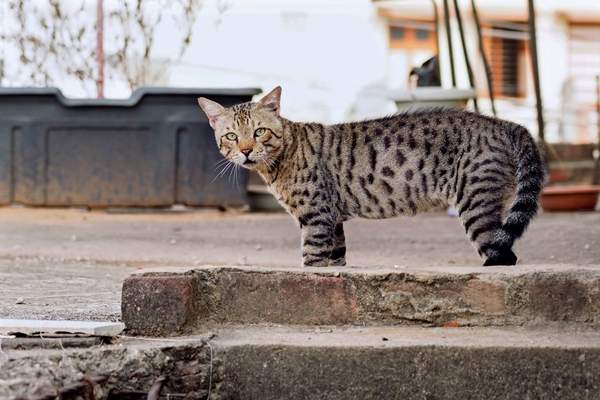
The Sokoke cat traces its modern breed history to coastal Kenya and has a short, glossy coat with a distinctive modified tabby pattern. The Governing Council of the Cat Fancy describes the Sokoke as a minority breed and exceptionally rare. Established U.S. breeders can be difficult to find.
2. Khao Manee
Thailand’s Khao Manee, or “white gem,” is a white shorthaired cat known for brilliant eyes that may be blue, amber, green, or odd-colored. Although the breed has old roots in Thailand, organized Western breeding is comparatively recent. TICA recognizes it, but it remains far less common in North America than the Siamese.
3. Kurilian Bobtail
Originating around the Kuril Islands and nearby parts of Russia, the Kurilian Bobtail has a naturally short, pom-pom-like tail formed by individual curves and kinks. TICA notes that no two tails are alike. It remains much less familiar in North America than in parts of Europe and Russia.
4. American Wirehair
The American Wirehair began with a spontaneous mutation in New York State and is distinguished by a springy, coarse coat. Although it originated in the United States and is recognized by the Cat Fanciers’ Association, it never became a mainstream household breed.
5. LaPerm
The LaPerm cat is recognizable for soft curls, waves, and ringlets in longhaired and shorthaired varieties. The breed developed after a naturally curly-coated kitten appeared in an Oregon barn-cat litter in the 1980s. Despite recognition by major registries, LaPerms remain uncommon compared with Ragdolls or Maine Coons.
6. Lykoi
Often nicknamed the “werewolf cat,” the Lykoi has a sparse, roaned coat and areas of partial hairlessness. The trait came from natural mutations rather than deliberate crossing with wild cats. Lykois are recognized by major cat organizations, yet their relatively recent development and limited breeding population keep them uncommon.
7. Korat
The Korat is an old Thai breed with a silver-tipped blue coat, green eyes, and cultural associations with good fortune. It remains comparatively uncommon because reputable breeding programs are limited and careful pedigree management matters. Prospective owners should ask about appropriate health screening, including testing relevant to gangliosidosis, an inherited condition known in the breed.
8. Burmilla
The Burmilla originated in the United Kingdom after an accidental mating between a Burmese and a Chinchilla Persian in the early 1980s. Breeders developed its softly shaded coat, expressive eyes, and playful temperament into a distinct breed. Although recognized by major registries, it remains much less visible in the United States than either founding breed, so American enthusiasts may face waitlists or travel.
9. Chartreux
With a dense blue-grey coat, copper-to-gold eyes, and a subtle smile-like expression, the Chartreux is a historic French breed that remains uncommon outside specialist circles. Buyers should learn how the breed differs from other grey cats rather than assuming any solid blue cat is a Chartreux.
10. Havana Brown
The Havana Brown is prized for its warm chocolate-brown coat, green eyes, and distinctive muzzle. Its breeding population has long been relatively small, making preservation and genetic diversity important for dedicated breeders. In the United States, it may be easier to meet one at a cat show than in an ordinary pet setting.
11. Toybob
The Toybob is a naturally small cat associated with Russia, with a compact body and short, kinked tail. The Toybob has gained recognition in cat organizations but remains rare. Limited breeder numbers make documentation and responsible breeding practices especially important.
12. Turkish Van
The Turkish Van is a large, athletic breed associated with the Lake Van region and known for the classic “Van pattern,” with color mainly on the head and tail against a largely white body. It is more established than some breeds here but remains relatively uncommon in the United States.
What Rarity Means for a Prospective Owner
A rare pedigree can be exciting, but availability should never matter more than welfare. Start with recognized breeder directories from organizations such as CFA or TICA, then ask about health testing, registration, kitten socialization, contracts, and litter frequency. If someone advertises a Sokoke kitten for immediate shipment but cannot provide verifiable pedigree information or discuss the breed’s background, walk away rather than rush because the cat is rare.
Useful related reading includes cat breed personality, low-maintenance cat breeds, and choosing a responsible cat breeder.
Frequently Asked Questions
What is considered the rarest cat breed in the world?
There is no universal registry counting every breed worldwide, so a definitive number-one ranking is difficult to prove. The Sokoke is frequently described by breed authorities as exceptionally rare and is often cited among the world’s rarest domestic breeds.
Are rare cat breeds more expensive?
They can be. Small breeding populations, health screening, travel, and import costs may raise prices. Cost varies widely, and a high price alone is not evidence of responsible breeding.
Are rare cat breeds legal to own in the United States?
The domestic breeds discussed here are generally kept as companion cats, but local rules can vary. Check state and municipal requirements, especially for breeds sometimes confused with wild-cat hybrids.
How can I find a reputable breeder of a rare cat?
Start with recognized registry breeder listings and breed clubs, then verify health testing, registration records, living conditions, contracts, and references. Be cautious of sellers who always have rare kittens available, pressure you to pay quickly, or avoid live video calls and veterinary documentation.
A Rare Breed Should Still Be the Right Breed
The rarest cat breeds in the world are fascinating because each carries a distinctive history, appearance, or genetic story. From the forest-rooted Sokoke to the curly LaPerm and compact Toybob, rarity adds intrigue but not automatic suitability. Learning about temperament, health, activity level, and breeder availability is more useful than chasing exclusivity. For the right household, one of these uncommon cats can be an extraordinary companion.