Dog enrichment has become everyday pet care, helped by the popularity of puzzle ideas and scent-game videos online. The best activities are not complicated or expensive. They simply give dogs safe opportunities to sniff, search, solve, chew, learn, and make choices.
Choose games that suit your dog’s age, mobility, and chewing style. Count treats within the daily food allowance, supervise homemade puzzles, and remove anything your dog tries to swallow. Begin at an easy level, then increase the challenge gradually.
Easy Food and Puzzle Activities
1. Turn Breakfast Into a Puzzle-Feeder Meal
Serve kibble in a suitable puzzle feeder instead of a standard bowl. Start easy, then increase the difficulty. Puzzle feeders encourage problem-solving and can slow dogs that normally rush through meals.
2. Make a Muffin-Tin Treasure Hunt
Scatter kibble across several muffin-tin cups and cover some with dog-safe balls. Let your dog lift the balls to find food. Change the baited cups each time for a simple introduction to scent games for dogs.
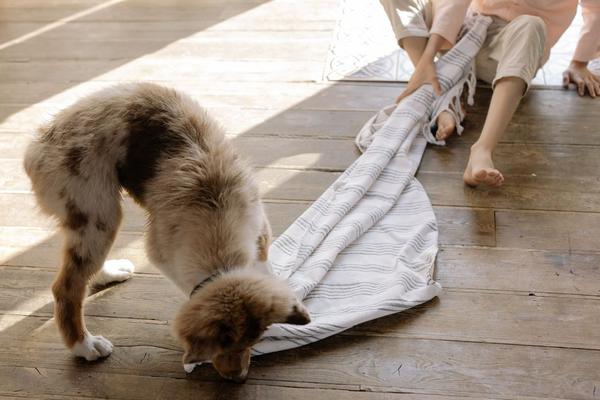
3. Roll Up a Towel Treat Puzzle
Sprinkle dry food over an old towel, roll it loosely, and let your dog unroll it with their nose and paws. Add folds for experienced dogs. Stop immediately if your dog begins tearing or swallowing fabric.
4. Fill and Freeze a Rubber Food Toy
Stuff a durable, correctly sized rubber toy with soaked kibble or wet dog food, then freeze it. Freezing makes the activity last longer. Check every ingredient carefully; nut butter, for example, must not contain xylitol.
5. Build a Supervised Cardboard Box Search
Place treats inside one clean box among several empty boxes and invite your dog to search. Later, loosely close the flaps. Supervise closely and remove the boxes if cardboard becomes something your dog wants to eat.
Nose-Led Games for Mental Stimulation
6. Scatter-Feed in One Room
Toss part of a meal across a safe, uncluttered floor and say “find it.” Start with visible pieces, then use furniture legs or wall edges. Sniffing turns an ordinary meal into useful mental stimulation for dogs.
7. Play the Three-Cup Game
Let your dog watch you place a treat beneath one sturdy cup, then encourage them to indicate it. Add two cups and begin changing positions. Reward a calm nose touch or paw.
8. Hide Treats Around the House
Ask your dog to wait while you hide several treats in easy locations, then release them to search. Count the treats so none are forgotten. A practical rainy-day version uses five hides in one room and five in another.
9. Create a Toy-Finding Challenge
Teach the name of a favourite toy by saying it before play. Later, place the toy partly behind a chair and ask your dog to find it. Gradually add more toys and distance.
10. Try Family Hide-and-Seek
One person holds the dog while another hides and calls. Celebrate the find with praise, play, or a small reward. Keep hiding places safe and accessible. It suits dogs motivated by social interaction.
Training Games That Build Confidence
11. Teach One Tiny Trick
Choose a simple skill such as touching your palm, spinning, or placing a paw on a low target. Train briefly, reward progress, and finish while your dog still wants more.
12. Play “Which Hand?”
Hide a treat in one closed hand, present both fists, and reward your dog for choosing correctly with their nose. Swap hands between rounds. It is ideal for small homes.
13. Practise Toy Names and Choices
Place two familiar toys on the floor and ask for one by name. Reward the correct choice with a brief game. If your dog guesses, reduce the difficulty.
14. Set Up a Safe Indoor Obstacle Course
Use cushions to step over, chairs to weave around, and an open blanket tunnel. Keep everything low and stable, and guide rather than force. Use gentler layouts for puppies, seniors, and dogs with joint problems.
15. Play the Hot-and-Cold Search Game
Hide a toy nearby. Use a calm voice when your dog moves away and a brighter voice as they approach it. Reward the find with play. Keep clues encouraging.
Calming, Sensory, and Independent Activities
16. Create a Snuffle-Mat Session
Hide kibble between the fabric strips of a snuffle mat and let your dog forage. Use it on a nonslip surface and supervise fabric chewers. It relies on the nose rather than speed.
17. Rotate Toys
Divide toys into small groups and offer only one group at a time. Swap them every few days. After a break, familiar toys often feel new again.
18. Offer a Safe Chewing Session
Provide an appropriate chew matched to your dog’s size and chewing strength. Stay nearby, inspect it regularly, and remove small or damaged pieces. No chew suits every dog.
19. Make a Dog-Safe Sensory Station
Arrange safe textures and objects, such as a rubber mat, a crinkly dog toy, and a box containing a familiar blanket. Let your dog investigate freely. Avoid strong fragrances and never force contact.
20. Give Your Dog a Choice-Based Play Session
Offer two safe activities, such as tug and a food toy, and let your dog choose. After a few minutes, pause and offer the choice again. This reveals preferences and adds choice.
How to Build a Balanced Enrichment Week
You do not need all 20 activities every day. Rotate food puzzles, scent work, training, chewing, and movement. A realistic weekday could include a puzzle-feeder breakfast, a three-minute trick session after work, and a snuffle-mat search in the evening. Pair indoor games with exercise, rest, and outdoor sniffing.
Watch your dog’s body language. Relaxed engagement, steady sniffing, and willingness to return are positive signs. Barking, frantic scratching, avoidance, or giving up may mean the task is too difficult. See our guides to dog body language, positive reinforcement training, and healthy dog treats for more help.
Frequently Asked Questions
How long should dog enrichment activities last?
Many dogs enjoy five- to fifteen-minute sessions, but duration varies. Finish before your dog becomes frustrated, overexcited, or tired.
Can enrichment replace a walk?
Enrichment provides valuable mental work, especially during bad weather or recovery, but it does not automatically replace appropriate exercise, toileting, outdoor sniffing, or social experiences.
How often should I use puzzle feeders?
Use them regularly when they are safe, clean, correctly sized, and included in the daily food allowance. Rotate designs and difficulty levels to maintain interest.
What if my dog destroys homemade puzzles?
Remove the materials and choose a durable, purpose-made option. Swallowing pieces creates a safety risk. Some dogs are better suited to supervised scent searches or short training games.
Keep Enrichment Personal
The best dog enrichment activities at home are safe and enjoyable. Start with one easy game, observe the response, and adjust the challenge. Variety matters, but matching each activity to the individual dog matters more.