Some cats are instantly familiar, while others can make even lifelong cat lovers stop and ask, “What breed is that?” The rarest cat breeds in the world are not always rare for the same reason. Some come from small natural populations, some are supported by only a handful of preservation breeders, and others are newer breeds with limited recognition or availability.
There is no single worldwide ranking for rarity. Registration numbers vary between associations and countries, so a breed scarce in the United States may be easier to find elsewhere. These unusual cat breeds nevertheless stand out for limited numbers, distinctive histories, or small breeder communities.
1. Sokoke
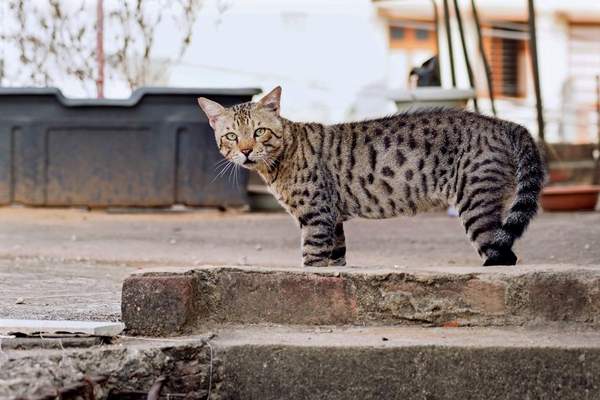
Often described as one of the world’s rarest domestic breeds, the Sokoke cat traces its modern development to coastal Kenya. It has a lean, athletic frame and a striking modified classic tabby pattern that can resemble tree bark. That wild-looking coat makes the Sokoke one of the most memorable exotic cat breeds, although it is fully domestic.
Sokokes are active, observant cats. A small foundation population and limited international breeding community make responsibly bred kittens difficult to find.
2. Khao Manee
The Khao Manee is a naturally occurring Thai breed known for its short white coat and brilliant eyes, which may be blue, gold, green, or odd-colored. Its name is commonly translated as “white gem,” an appropriate description for a cat with such a polished, luminous appearance.
Although long established in Thailand, it remained little known elsewhere for years. Breeding populations are still small in many regions.
3. American Wirehair
The American Wirehair began with a spontaneous coat mutation found in a farm-cat litter in upstate New York during the 1960s. Its dense, springy coat may feel crimped or wiry, including the whiskers. No other established breed has quite the same texture.
Despite being an American original, it has few registrations and breeders. Its easygoing temperament is often compared with the American Shorthair used in its development.
4. Turkish Van
The Turkish Van is an ancient natural breed associated with the region around Lake Van in eastern Turkey. It is a strong, athletic, semi-longhaired cat, traditionally recognized for a mostly white body with color concentrated on the head and tail.
Nicknamed the “swimming cat,” it may be fascinated by water. Genuine pedigree Turkish Vans are far less common than cats that simply share the van color pattern.
5. LaPerm
The LaPerm cat is famous for a soft, curly or wavy coat created by a natural mutation. The breed began in Oregon in 1982, when a nearly hairless kitten later grew a coat of loose curls. LaPerms now appear in longhaired and shorthaired varieties and in many colors and patterns.
These affectionate cats remain difficult to locate because the breeder network is small. Their dramatic coat usually needs gentle, regular grooming.
6. Kurilian Bobtail
Originating around Russia’s Kuril Islands and Sakhalin, the Kurilian Bobtail is a natural breed with a short, pom-pom-like tail. Each tail has its own pattern of curves, kinks, and bends, giving every cat an individual silhouette.
Muscular and intelligent, Kurilian Bobtails are better established in parts of Europe and Russia than in the United States.
7. Korat
The Korat is a silver-blue breed from Thailand with a heart-shaped head and luminous green eyes. Traditionally associated with good fortune, it has been preserved as a distinct natural breed rather than developed primarily for a fashionable appearance.
Korats are people-oriented and sensitive. They remain uncommon because breeders work from a limited gene pool and emphasize pedigree records and health screening.
8. Chartreux
With its dense blue-gray coat, copper-toned eyes, and quietly smiling expression, the Chartreux is one of France’s best-known heritage breeds. Yet outside dedicated cat-fancy circles, it can be surprisingly hard to find.
Chartreux cats are sturdy, calm, and playful. Small breeder numbers in the United States often mean waiting lists, and pedigrees should be verified because other breeds can look similar.
9. Singapura
The Singapura is a small cat with large eyes, oversized ears, and a warm sepia-ticked coat. Its compact size gives it a delicate look, but the breed is typically lively, curious, and eager to climb.
Although recognized by major associations, the Singapura remains uncommon. Its distinctive appearance appeals to fans of unusual cat breeds.
10. Lykoi
The Lykoi is sometimes called the “werewolf cat” because its sparse roan coat and partially hairless face create a dramatic, untamed look. The appearance comes from a naturally occurring genetic mutation observed in domestic cats, not from crossing cats with wild species.
As a young breed, the Lykoi has a small global population. Ethical breeders monitor health while maintaining genetic diversity.
11. Peterbald
Developed in Russia during the 1990s, the Peterbald is an elegant, slender breed that may be born bald or have a coat ranging from very fine fuzz to a short, textured covering. Its long limbs, large ears, and narrow head create an unmistakable profile.
Peterbalds are social, but skin care depends on hair type. Limited North American availability keeps them among rarer exotic cat breeds.
12. Japanese Bobtail
The Japanese Bobtail has a short tail formed by natural bone structure rather than docking. The tail hair often fans outward, producing the breed’s familiar pom-pom effect. These cats have appeared in Japanese art and folklore for centuries and are linked with the famous beckoning-cat figure.
Despite their cultural visibility, pedigree Japanese Bobtails are uncommon in many countries. They are active, vocal, and people-focused.
Frequently Asked Questions
What is considered the rarest cat breed in the world?
The answer depends on the registry, country, and year. The Sokoke is frequently described as one of the rarest domestic breeds, while registration data from individual associations may identify other breeds as the least registered in a particular region.
Why are some cat breeds so rare?
A breed may have a small founding population, very few active breeders, restricted geographic origins, or limited recognition. Responsible breeding also moves slowly because genetic diversity, temperament, and health must be protected.
Are rare cat breeds more expensive?
They often are, largely because breeding programs are small and kittens may be scarce. However, price does not guarantee responsible breeding. Buyers should prioritize health testing, transparent pedigrees, proper socialization, and a written contract.
Can rare breeds be found in animal shelters?
It is possible but uncommon. Shelters frequently receive cats with unusual coats or body shapes that resemble pedigree breeds, yet appearance alone does not confirm ancestry. A cat can be special and distinctive without belonging to a recognized rare breed.
Why These Rare Cats Deserve Thoughtful Attention
The rarest cat breeds in the world are fascinating not simply because they are difficult to find, but because each reflects a particular place, mutation, history, or preservation effort. From the patterned Sokoke cat to the curly-coated LaPerm cat, these breeds show how diverse domestic cats can be.
Anyone considering one should look beyond novelty. A reputable breeder will discuss health, temperament, care requirements, and whether the breed suits the household. Rarity may attract attention, but responsible ownership is what allows these remarkable cats to thrive.