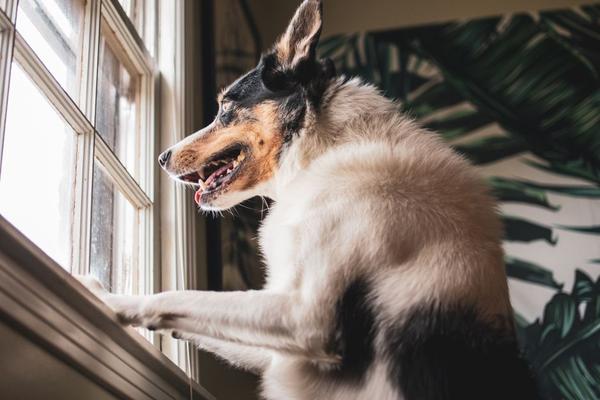
A dog who panics when the front door closes is not being stubborn or spiteful. Separation anxiety is a genuine distress response that can affect dogs that otherwise seem confident. Emotional wellbeing deserves attention during routine veterinary visits, especially because many signs appear only when nobody is watching. Recognising separation anxiety in dogs early makes treatment easier and helps prevent repeated fear from becoming an established pattern.
What separation anxiety looks like
The most familiar dog anxiety symptoms are barking, howling, destructive chewing, and toileting indoors after an owner leaves. Damage often appears around doors, windows, crates, or other exit points because the dog is trying to follow the person or escape the situation. Some dogs drool heavily, pant, pace, tremble, vomit, refuse food, or lick and bite themselves. Others become restless as soon as they notice departure cues such as shoes, keys, a work bag, or a coat.
Not every anxious dog makes a mess. A quiet dog may stand by the door, scan the room repeatedly, freeze, or spend the entire absence unable to settle. A home camera can reveal these hidden signs. Record the first 30 to 60 minutes after leaving, since separation distress often begins before departure or shortly afterwards. Note when the behaviour starts, whether the dog can eat, and what happens when outside sounds occur.
Separation anxiety or something else?
Destruction and barking do not automatically prove separation anxiety. A young dog may chew from boredom, a poorly house-trained dog may have an accident, and a dog reacting to people outside may bark even when a family member is home. Pain, urinary problems, digestive illness, age-related cognitive changes, noise sensitivity, and fear of confinement can also produce similar behaviour.
The clearest clue is a consistent link between distress and the absence, or expected absence, of a particular person or all human company. Video evidence and a veterinary examination help rule out medical and environmental causes. This distinction matters because calming a dog alone requires a different plan from treating boredom, noise fear, or a health problem.
Why some dogs struggle when left alone
There is rarely one simple cause. Some dogs never learned that short periods alone are safe. Others develop problems after a sudden schedule change, moving home, losing a companion, spending an unusually long period constantly beside their owner, or experiencing a frightening event while alone. Genetics, early social experience, temperament, and existing fear problems may also influence risk.
Following an owner from room to room does not by itself predict separation anxiety. The more useful question is whether the dog can relax independently. Resting while people move around and tolerating brief departures are valuable life skills.
A practical treatment plan
Prevent full panic while training
Repeatedly leaving a dog long enough to panic can make progress harder. During treatment, reduce unavoidable absences where possible by using family help, a suitable dog sitter, daycare, or adjusted work arrangements. The goal is not permanent dependence on company; it is to stop rehearsing severe fear while new coping skills are taught.
Build independence in tiny steps
Graduated absence training is central to dog anxiety treatment. Begin below the dog’s distress threshold, even if that means touching the door handle, stepping outside for two seconds, and returning calmly. Increase time only while the dog remains relaxed. A camera is useful because whining, pacing, or abandoning a favourite treat means the step was too difficult.
For example, imagine a dog that begins panting 20 seconds after the door closes. Starting with five-minute absences will not teach calmness. A better session might include several departures lasting three to ten seconds, mixed in an unpredictable order, with generous rest between attempts. Over days or weeks, seconds can become minutes. Progress is rarely perfectly linear, so shorten the next absence after a difficult session.
Create calm associations
Give a special food puzzle, safe chew, or stuffed toy during easy alone-time practice, provided the dog is relaxed enough to use it. Exercise, toileting, and a small meal before departure can support relaxation, but they do not cure panic. Close curtains or use gentle background sound when outdoor activity triggers barking.
A crate is not automatically a solution. Some dogs feel secure in one, while others become more frightened when confined and may injure themselves trying to escape. Choose a comfortable area based on the individual dog’s history and observed behaviour.
Use reward-based professional support
Do not punish damage, accidents, or vocalising after returning home. The dog cannot connect delayed punishment with an earlier action, and fear of the owner’s return may worsen the problem. “Crying it out” can also expose the dog to prolonged distress rather than teaching safety. Reward-based methods are the humane and practical choice.
Moderate or severe cases often need a personalised plan from a veterinarian and a qualified clinical animal behaviourist or veterinary behaviourist. A vet may prescribe medication when anxiety is intense, departures cannot be fully avoided, or the dog is too distressed to learn. Medicines such as fluoxetine or clomipramine may be considered alongside behaviour modification, but they require veterinary assessment, monitoring, and appropriate follow-up. Never give human anxiety medication or sedatives without veterinary direction.
How long does improvement take?
Mild cases may improve steadily within weeks, while established or severe anxiety can require months of careful work. Measure success by calmer body language, eating during absences, faster settling, and a gradual increase in comfortable alone time, not by forcing the dog to endure a fixed schedule. Keep a simple log of departure length and behaviour so small gains remain visible.
Related guides on understanding dog body language, mental enrichment for dogs, and reward-based dog training can help owners build a wider routine that supports confidence without overstimulation.
Frequently asked questions
Can separation anxiety in dogs develop suddenly?
Yes. A change in work routine, moving, illness, a frightening event, or the loss of a person or animal companion can trigger new signs. Sudden behavioural change should be discussed with a vet to rule out pain or illness.
Does getting another dog cure separation anxiety?
Usually not. Some dogs are distressed by being completely alone, but others panic specifically when a particular person leaves. A second dog may add responsibility without solving the underlying fear.
Should I ignore my dog before leaving and after returning?
Calm departures and greetings can reduce excitement, but owners do not need to withhold affection for long periods. The essential work is teaching safe, gradual absences below the dog’s anxiety threshold.
When should I seek professional help?
Contact a vet promptly if the dog attempts to escape, injures itself, refuses food, vomits, soils frequently, or cannot tolerate even brief absences. Early professional guidance can prevent welfare problems and speed up an effective treatment plan.
Helping your dog feel safe alone
Separation anxiety improves through accurate diagnosis, careful management, and patient training rather than punishment or quick fixes. Watch what your dog actually does when left, work below the point of panic, and involve veterinary professionals when symptoms are significant. With a plan tailored to the individual dog, calm alone time can become a learned skill instead of a daily crisis.